

Silver Half Dollar Value Guide
The 10 most valuable silver half dollars are:
- 1797 Draped Bust, Small Eagle
- 1796 Draped Bust, Small Eagle (15 and 16 Stars)
- 1838-O Proof Capped Bust
- 1853-O Seated Liberty, No Arrows
- 1817/4 Capped Bust
- 1806 Draped Bust, Knobbed 6, Stem Not Through Claw
- 1870-CC Seated Liberty
- 1815/2 Capped Bust
- 1878-S Seated Liberty
- 1873 Seated Liberty, Open 3, No Arrows
The difference between an ordinary silver half dollar and a million-dollar rarity can come down to a date, mintmark, die variety, or even a detail buried beneath decades of wear. From the 1796 Draped Bust to scarce Carson City issues, the series is full of coins worth examining closely.
If you own a valuable silver half dollar and want to know how much it’s truly worth, try a free online coin appraisal from Coinfully. There’s no pressure to sell, and the appraisal is yours to keep whether you decide to sell or keep your coins.
Table of Contents
How Much Are Silver Half Dollars Worth?
The big question is: how much is a silver half dollar worth? The value of silver half dollars can range anywhere from their intrinsic silver content to well into six figures and beyond, depending on age, rarity, and condition.
The 10 Most Valuable Silver Half Dollars
The most valuable silver half dollars are concentrated among early Federal issues and exceptionally rare varieties, where low mintages, distinctive die characteristics, and few surviving examples can drive values from four or five figures into the hundreds of thousands or even millions.
*The prices below were sourced from NGC and are current as of early August 2026 but are subject to change.
1797 Draped Bust Half Dollar, Small Eagle
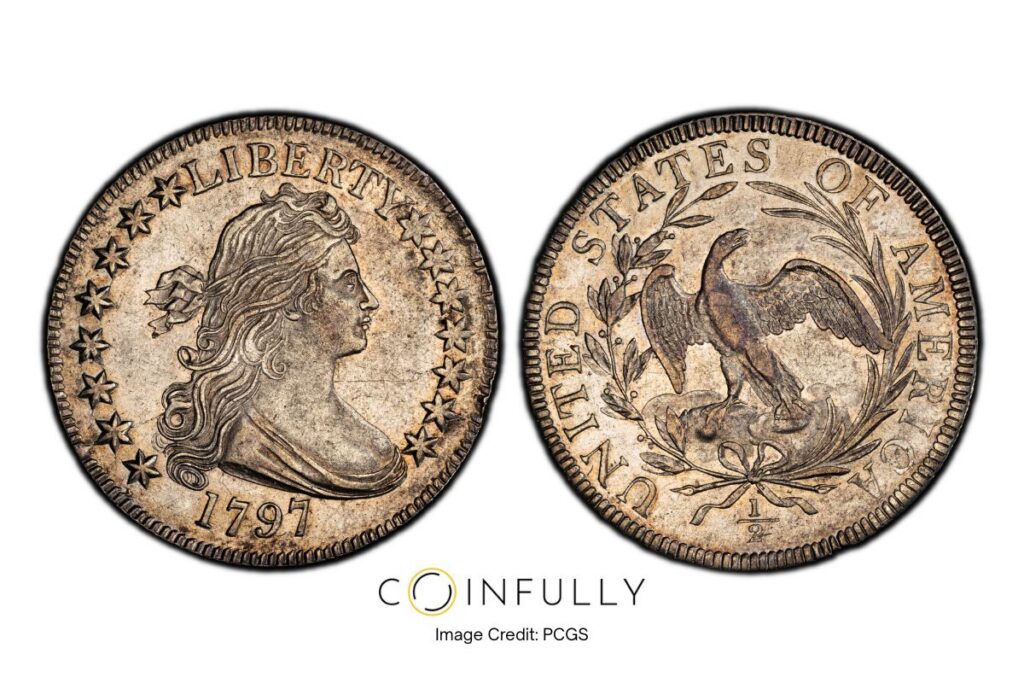
The Philadelphia Mint struck 2,984 1797 half dollars, but only 175 are thought to survive across all grades. Its lettered edge reads FIFTY CENTS OR HALF A DOLLAR.
As of August 2026, NGC values range from about $52,500 in Good condition to $210,000 in AU55. A 2021 auction saw a realized price of $1.68 million for a specimen graded MS66.
1796 Draped Bust Half Dollar, Small Eagle (15 and 16 Stars)
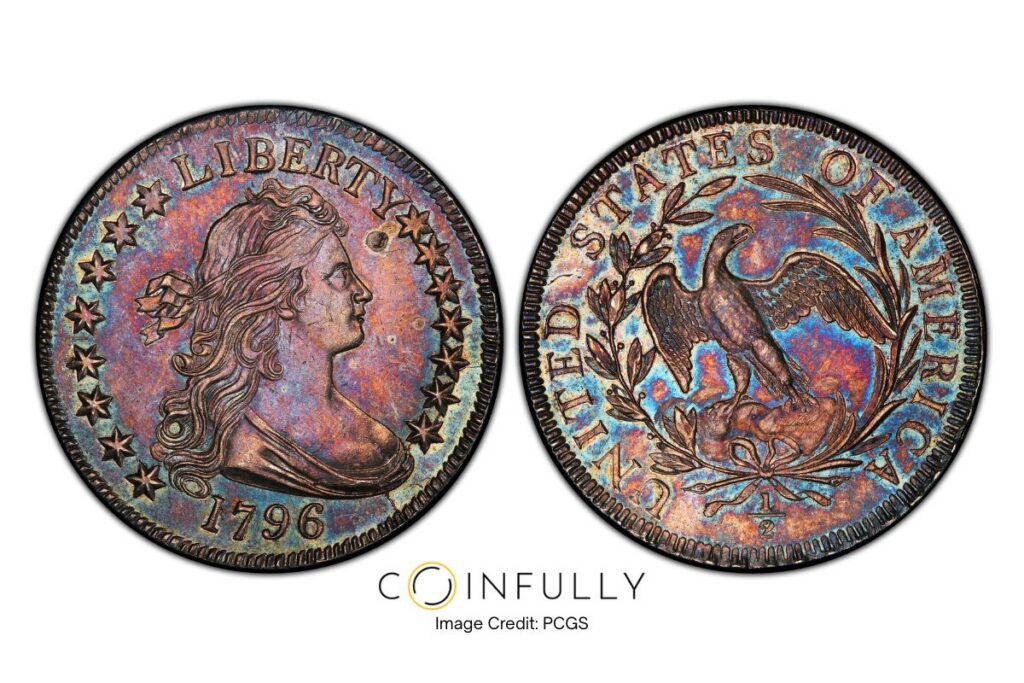
Only 934 Draped Bust half dollars were struck in 1796, divided between 15-star and 16-star obverses after Tennessee joined the Union as the 16th state. Estimates put survival numbers of the 15-star issued at 75 and 40 for the 16-star issue.
Values range from $38,000 (15 stars) to $42,000 (16 stars) in Good to $480,000 (15 stars) to $530,000 (16 stars) in MS64.
1838-O Proof Capped Bust Half Dollar
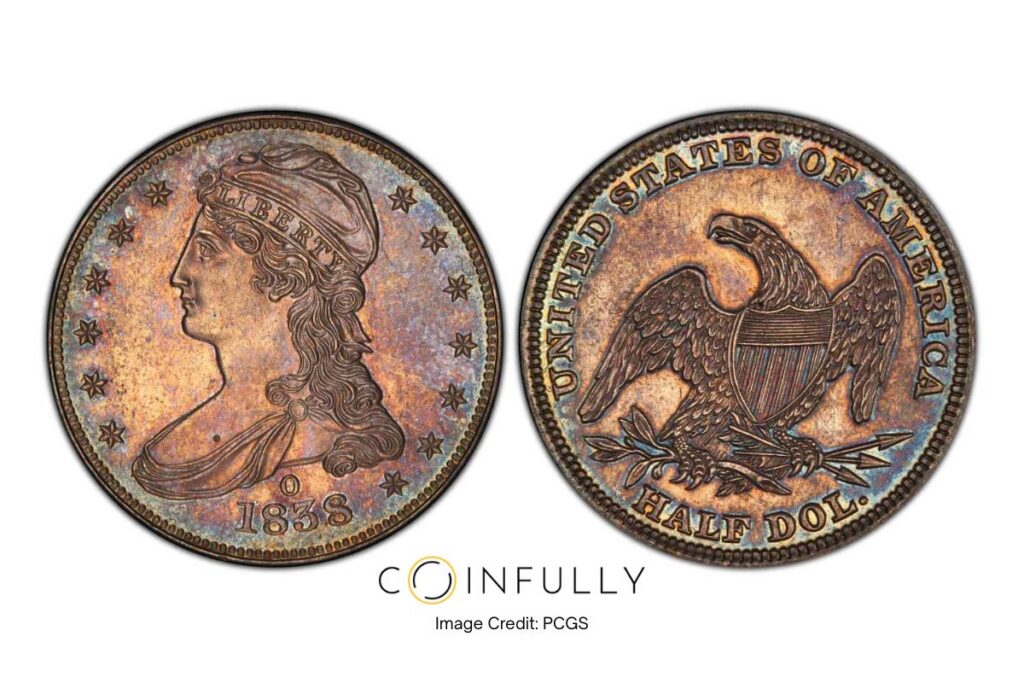
Approximately 20 1838-O Capped Bust half dollars were reportedly produced as presentation pieces, and no more than 11 are known today.
The O mintmark appears above the date, but numismatists still debate whether the coins were physically struck in New Orleans or are actually showpiece specimens minted in Philadelphia to demonstrate the new “O” mintmark.
Issues graded XF are valued at $365,000, and AU50 examples are worth $390,000.
1853-O Seated Liberty Half Dollar, No Arrows
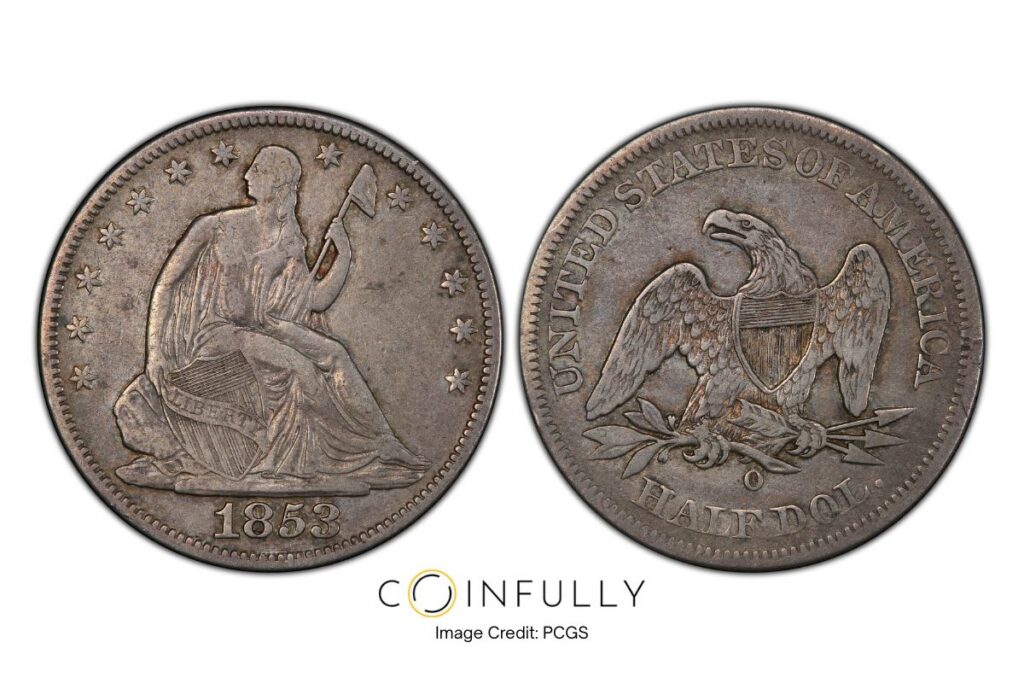
Only four 1853-O No Arrows half dollars are confirmed. Struck at the old 13.36-gram standard, the issue became obsolete after Congress reduced the half dollar’s authorized weight in February 1853, and most examples were apparently melted.
Examples in VG to F condition are valued at $265,000–$400,000.
1817/4 Capped Bust Half Dollar
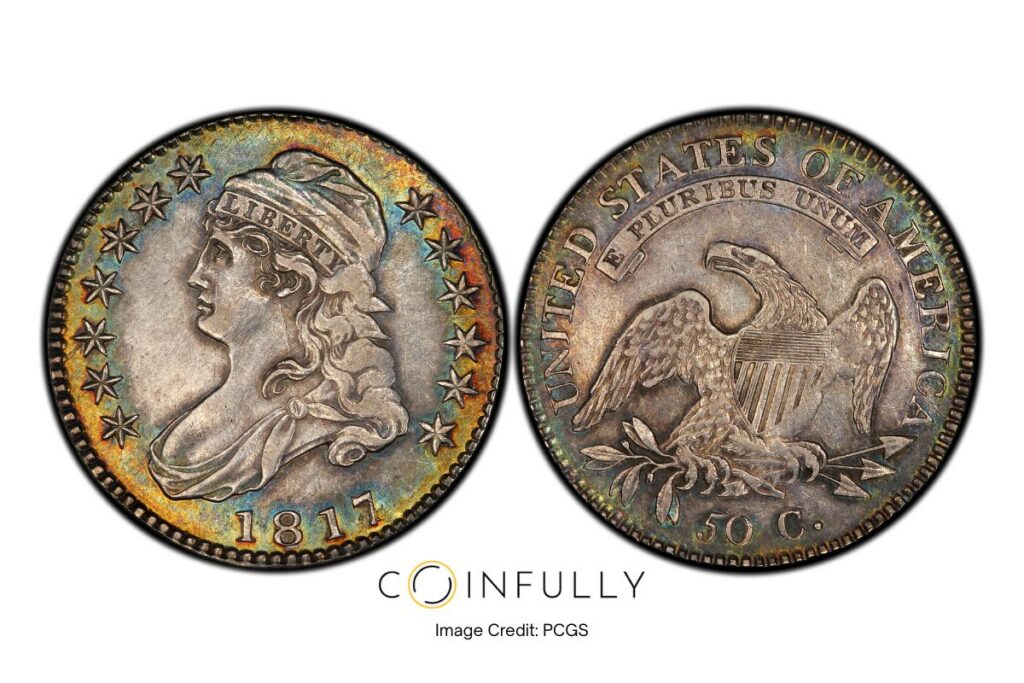
The 1817/4 Capped Bust half dollar shows the remnants of a 4 beneath the final 7 in the date. About 11 examples are known. According to PCGS, “Most of the known examples are of the Overton 102a variety, which means they show a somewhat vertical die crack on the obverse.”
Examples graded VG are worth $150,000, and AU50 coins can fetch $425,000.
1806 Draped Bust Half Dollar, Knobbed 6, Stem Not Through Claw
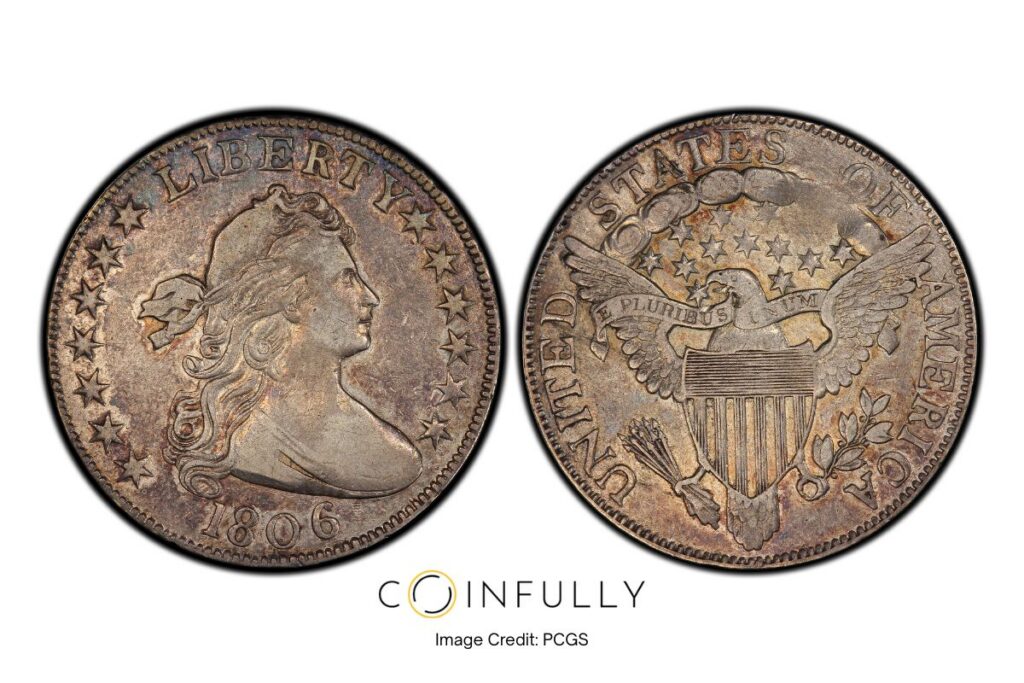
This 1806 variety pairs a knob-shaped upper loop on the 6 with a reverse branch stem ending before the eagle’s claw. The 839,576 mintage covers all 1806 half dollars, not this subtype, but it’s estimated that there are only five surviving today and none existing in Mint State.
In Good condition, it’s worth $76,000, and at XF, the value jumps to $140,000.
1870-CC Seated Liberty Half Dollar
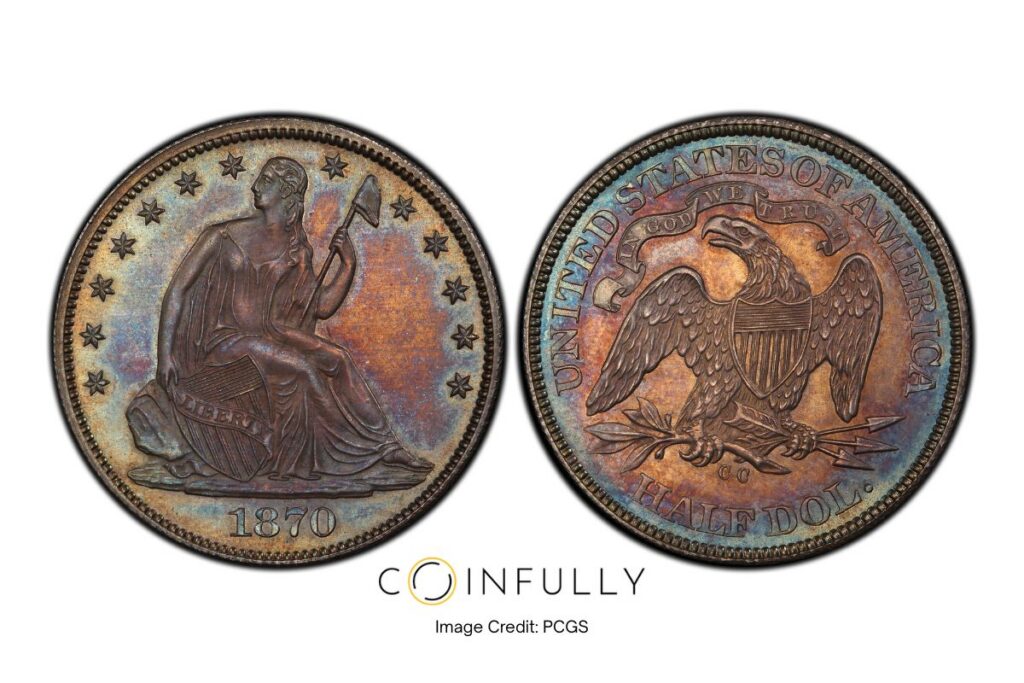
The 1870-CC was Carson City’s first half dollar, and it carries the CC mintmark beneath the eagle. Only 54,617 were produced, approximately 200 are thought to survive, and Mint State survivors are scarce.
Examples graded VG are valued at $4,000. For AU55 coins, the value jumps to $44,500, and an MS64 is worth $385,000.
1815/2 Capped Bust Half Dollar
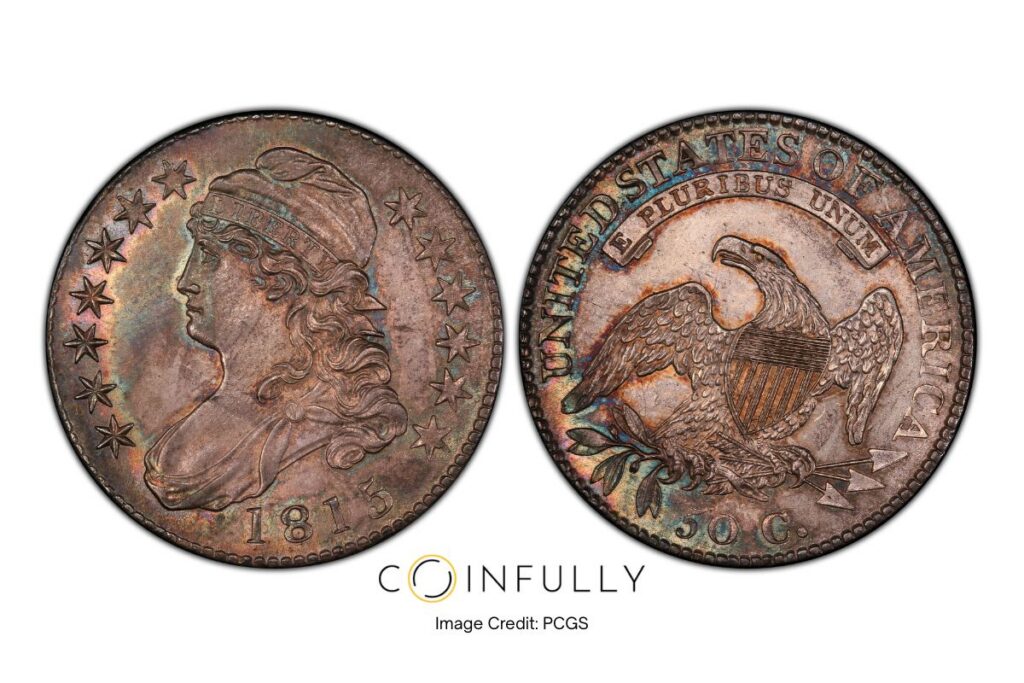
Philadelphia struck 47,150 half dollars dated 1815, all using an overdate die with traces of a 2 visible beneath the final 5, even on many worn examples. PCGS estimates 800 survivors, including only 12 in MS60 or finer.
Coins carrying a grade of AU50 are worth $10,800, while an MS66 specimen is valued at $150,000.
1878-S Seated Liberty Half Dollar
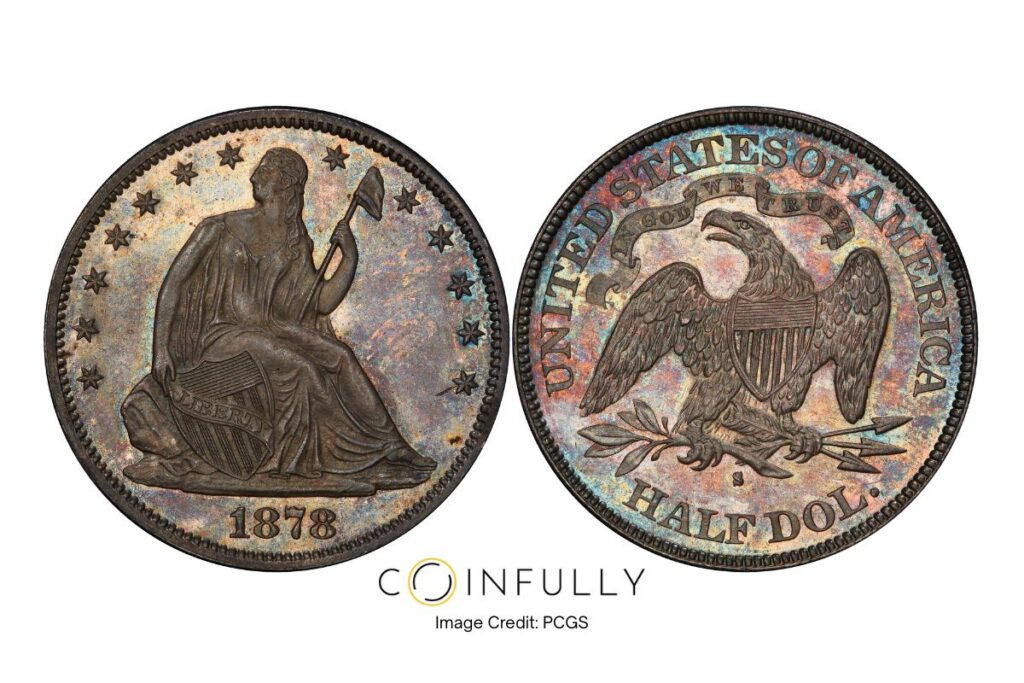
San Francisco struck only 12,000 Seated Liberty half dollars in 1878, all from one die marriage distinguished by a very small S beneath the eagle. PCGS estimates 50 survivors, including 15 in MS60 or better.
Values range from $50,000 to coins graded Good to $300,000 for MS65 examples.
1873 Seated Liberty Half Dollar, Open 3, No Arrows
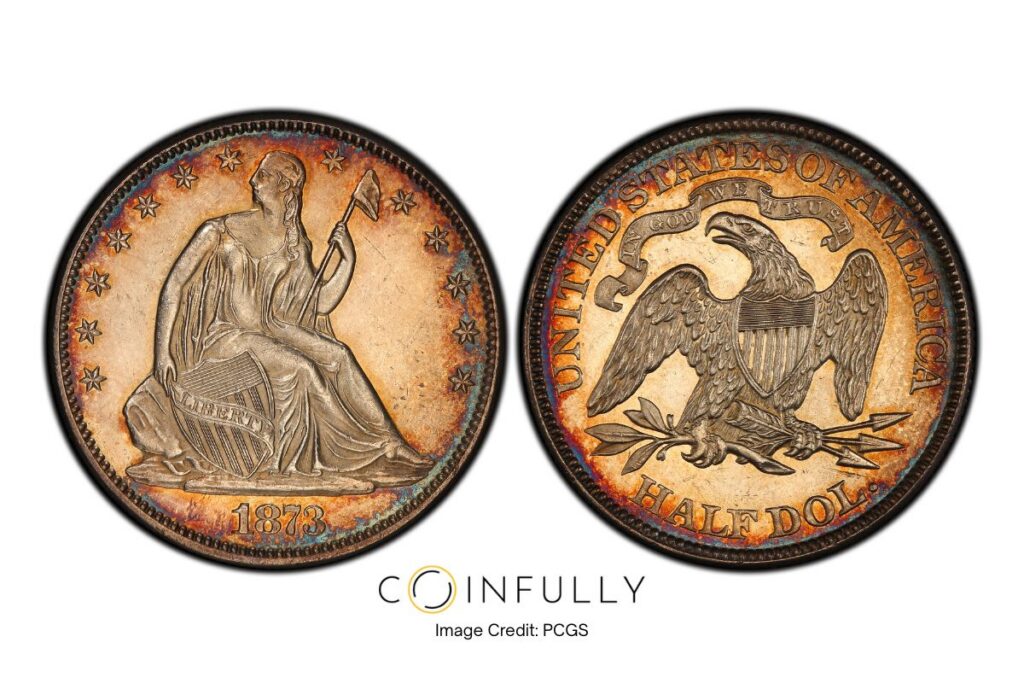
On this Philadelphia business strike, the knobs of the Open 3 are widely separated and no arrows flank the date. Although 214,200 were struck, only roughly 150 still survive today.
Examples in VF condition are worth $6,700, AU55 coins are valued at $20,000, and a specimen graded MS63 is worth $73,500.
Other Key Dates and Valuable Half Dollars To Look For
- 1794 Flowing Hair: This was the first half dollar struck by the Mint, with a reported mintage of 23,464 pieces. A well-centered example with full stars commands a substantial premium.
- 1801 and 1802 Draped Bust, Heraldic Eagle: These had mintages of roughly 30,289 and 29,890 pieces, the lowest of the type by a wide margin. Examples grading above Very Fine surface only occasionally.
- 1812/1 Large 8 Capped Bust: The Small 8 overdate is collectible with patience, while the Large 8 (Overton-102) shows a noticeably taller final digit and is many times scarcer.
- 1839-O Capped Bust: This was the first half dollar from the New Orleans Mint and the only Capped Bust half dollar with its mintmark on the obverse, above the date. Fewer than 180,000 were struck.
- 1839 Seated Liberty, No Drapery: Liberty appears without the fold of drapery at her elbow, a detail added partway through the first year.
- 1866-S Seated Liberty, No Motto: San Francisco struck 60,000 half dollars before receiving reverse dies carrying IN GOD WE TRUST and then produced the With Motto version the same year.
- 1871-CC, 1872-CC, 1874-CC, and 1878-CC Seated Liberty: Carson City Seated Liberty half dollars all endured heavy circulation. Strikes are often soft at the head and lower shield lines, and uncirculated survivors number in the single to low double digits.
- 1892-O Barber, Micro O: A small quantity received a mintmark punch sized for a smaller denomination, producing an O roughly half the normal diameter. Certification by PCGS or NGC is required for this variety to trade at full value.
- 1913, 1914, and 1915 Barber: Low Philadelphia mintages of roughly 188,000, 124,000, and 138,000 close out the series. Surviving examples tend to be well worn.
- 1921-S Walking Liberty: San Francisco struck 548,000 pieces, and chronically weak strikes at Liberty’s hand and the eagle’s breast feathers compound the low survival rate. MS65 or better examples are considered extremely rare.
- 1921-D Walking Liberty: This had the lowest mintage at 208,000. This will typically be the coin everyone is looking to add to complete their set.
- 1998-S Matte Finish Kennedy: Issued only in a two-coin collector set with a Robert F. Kennedy commemorative dollar, this 90% silver half dollar had a mintage of roughly 62,000 and carries the distinction of being the only silver matte finish Kennedy half dollar.
Factors That Determine the Value of Half Dollar Silver Coins
Silver half dollar value is shaped by several measurable characteristics that collectors and investors evaluate together.
- Silver content: The melt value establishes a baseline. Many issues are worth far more than their precious metal content.
- Mintage numbers and survival rates: Rarity is driven largely by how many coins were produced and how many are known to exist today, especially for early issues.
- Condition: Sharply struck, problem-free half dollars command far higher prices than worn or damaged coins, especially when graded.
- Mintmark: The mintmark can indicate a branch mint with lower output, which often increases desirability.
- Varieties and overdates: Varieties, overdates, and other die characteristics can create substantial premiums when only a small number of examples are known to exist. These coins need to be certified by a grading company in order to achieve maximum appraisal value.
- Historical significance and demand: Historical significance and collector demand can increase value, particularly for important early issues, scarce varieties, and coins with documented provenance.
Silver Half Dollar Years
U.S. half dollars minted from 1794–1970 contain silver. Coins dated 1794–1964 are generally 90% silver, while Kennedy half dollars dated 1965–1970 contain 40% silver.
From 1971 onward, circulating half dollars contain no silver, although later collector issues include silver compositions.
Half Dollar Types Every Collector Should Know
U.S. half dollars have gone through a series of distinct designs since 1794, with each type reflecting changes in American coinage, technology, and history.
Flowing Hair Half Dollar (1794–1795)
The Flowing Hair half dollar was the first half dollar issued by the United States Mint. Designed by Chief Engraver Robert Scot, it shows Liberty with flowing hair on the obverse and an eagle within a wreath on the reverse.
Limited production and heavy circulation make well-preserved examples scarce.
Draped Bust Half Dollar (1796–1807)
The Draped Bust half dollar replaced the Flowing Hair design, depicting Liberty with draped fabric on the obverse. Its reverse includes both the Small Eagle and Heraldic Eagle types, with several low-mintage dates and varieties that are highly sought after by collectors.
Capped Bust Half Dollar (1807–1839)
The Capped Bust half dollar features Liberty wearing a Phrygian cap and an eagle with a shield on the reverse. From 1807–1836, the coins had lettered edges; reeded-edge issues followed in 1836–1839, with 50 CENTS on the reverse in 1836–1837 and HALF DOL. in 1838–1839.
Seated Liberty Half Dollar (1839–1891)
The Seated Liberty half dollar depicts Liberty seated on a rock, holding a shield and liberty pole. The long-running series includes numerous scarce dates, mintmark combinations, and varieties, particularly among issues from the New Orleans and Carson City Mints.
Barber Half Dollar (1892–1915)
Designed by Charles E. Barber, this half dollar features a classical Liberty portrait and a heraldic eagle. Key dates include 1913, 1914, 1915, 1892-S, and 1897-O, while the 1892-O Micro O is a notable scarce variety.
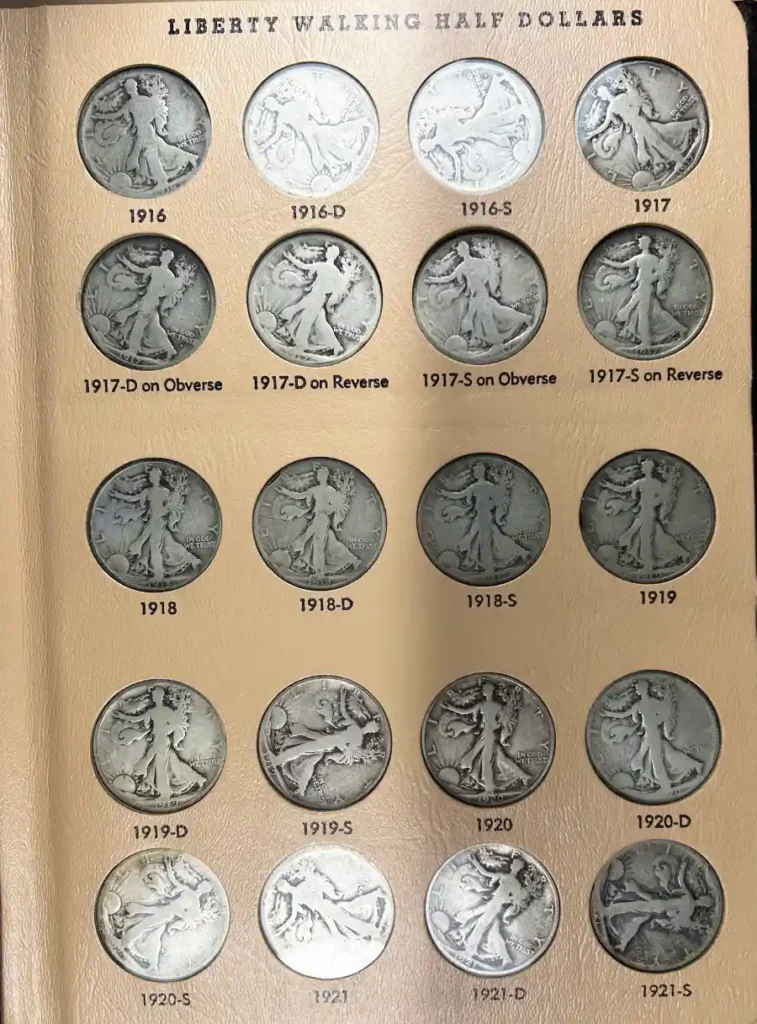
Walking Liberty Half Dollar (1916–1947)
Designed by Adolph A. Weinman, the Walking Liberty half dollar shows Liberty striding toward the sunrise and an eagle perched on a rock with an olive branch. Scarce dates include the 1916-S, 1917-S, 1919-D, 1919-S, 1921, 1921-D, 1921-S, and 1938-D.
Franklin Half Dollar (1948–1963)
The Franklin half dollar features Benjamin Franklin on the obverse and the Liberty Bell on the reverse, making it the first regular-issue U.S. coin to depict a person who was not a president.
Strike quality and surface preservation are especially important to collectors, with fully struck examples with full bell lines (FBL) worth thousands.
Kennedy Half Dollar (1964–1970)
The Kennedy half dollar debuted in 1964 following President John F. Kennedy’s assassination. The 1964 issue contains 90% silver, and half dollars dated 1965–1970 contain 40% silver.
Kennedy Half Dollar (1971–Present, with the exception of 2026)
Beginning in 1971, circulating Kennedy half dollars switched from 40% silver to copper-nickel clad composition.
Production for general circulation declined substantially after 2001, although the Mint continues to produce Kennedy half dollars primarily for annual sets and other numismatic products.
For 2026, production was paused to allow for the Enduring Liberty design that celebrates 250 of American independence.
Bicentennial Half Dollar (1976)
The 1976 Bicentennial Kennedy half dollar carries the dual date 1776–1976 and features Independence Hall on the reverse. Most were copper-nickel clad, but the U.S. Mint also produced collector versions containing 40% silver.
Silver Proof Kennedy Half Dollar (1992–2018, 2019–Present)
The U.S. Mint resumed 90% silver Kennedy half dollars for collector proof sets in 1992. Beginning in 2019, the silver half dollar in the Mint’s Silver Proof Set changed to .999 fine silver, creating the distinction between the two periods.
50th Anniversary Silver Issues (2014)
The U.S. Mint marked the 50th anniversary of the Kennedy half dollar with several special silver issues in 2014, including proof, reverse proof, enhanced uncirculated, and uncirculated finishes. The four-coin silver collection was struck in 90% silver.
Enduring Liberty Half Dollar (2026)
For 2026, the U.S. Mint replaced the Kennedy design for one year with the Enduring Liberty design to commemorate the nation’s 250th anniversary.
The obverse features the Statue of Liberty, while the reverse depicts Liberty passing her torch to a new generation. The coin is copper-nickel clad, not silver. The Kennedy design is scheduled to return in 2027.
Half Dollar Value Chart for 1794–1970
This silver half dollar value chart provides a quick reference for the major U.S. silver half dollar types struck from 1794 through 1970.
*The prices below were sourced from NGC and are current as of early August 2026 but are subject to change.
**Note that Barber, Walking Liberty, Franklin, and Kennedy half dollars typically trade for their silver value and prices are heavily subject to change due to current market conditions.
| Type | Years | Mintage | Circulated (G) | About Uncirculated (AU50) | Uncirculated (MS60 or better) |
| Flowing Hair | 1794–1795 | 323,144 | $1,200–$4,500 | $16,750–$72,500 | $45,000 and up |
| Draped Bust | 1796–1807 | 1,604,705 | $215–$52,500 | $4,300–$180,000 | $9,150 and up |
| Capped Bust | 1807–1839 | ~91 million | $65–$2,225 | $360–$425,000 | $1,100 and up |
| Seated Liberty | 1839–1891 | ~150 million | $35–$1,530 | $215–$7,650 (excludes rarities) | $430 and up |
| Barber | 1892–1915 | 135+ million | $37.50–$425 (excludes 1892-O Micro O) | $360–$5,350 (excludes 1892-O Micro O) | $525 and up |
| Walking Liberty | 1916–1947 | 485+ million | $27.50–$300 | $36.50–$8,000 | $44 and up |
| Franklin | 1948–1963 | ~498 million | $24.75 | $25.50 | $29 and up |
| Kennedy | 1964 | 430+ million | $24 | $24.50 | $22.50 and up |
| Kennedy | 1965–1970 | 845+ million | $9.75 | $10.25 | $12.25 |
What To Do if You Own a Valuable Silver Half Dollar
If you own a potentially valuable silver half dollar, take the following steps to preserve its condition and avoid unknowingly sacrificing value.
- Do not clean or alter the coin.
- Confirm whether the coin is bullion or numismatic.
- Store the coin in a non-PVC holder in a dry, stable environment.
- Obtain a professional appraisal.

How Coinfully Can Help
Attempting to appraise old half dollar coins yourself can be difficult. Coinfully is a Charlotte-based online company that specializes in buying rare coins. Coinfully offers detailed, no-cost coin appraisals that help you understand the true value of your silver half dollars.
Janet, a recent Coinfully client, left this Trustpilot review: “Our representative was very professional and helpful. We would certainly use him again.”
Start with a free online coin appraisal by submitting clear photos or a simple inventory of your coins. Coinfully’s numismatic experts will evaluate your items, consider rarity and condition, and provide a detailed appraisal and market-driven offer with no pressure to sell.
If you choose to sell your coins, Coinfully fully insures the shipment through Lloyd’s of London and verifies the collection under 4K security cameras. Payment is issued immediately upon verification.
For large or historically significant collections, Coinfully also provides a complimentary at-home appraisal service. A trained specialist will travel to your home, review your coins in person, explain their findings, and offer a competitive purchase price if you choose to sell.
*Coinfully is an accredited member of the American Numismatic Association, an authorized, registered dealer with both PCGS and NGC, and BBB accredited with an A+ rating.
Frequently Asked Questions About Silver Half Dollar Coins
Are half dollar coins worth anything?
Yes. Many half dollars are worth more than face value. Older issues contain silver, which provides a base value, while rare dates and varieties can be worth much more. Condition, mintmark, silver content, mintage, and surviving population all affect a coin’s value, especially for scarce issues.
Is a half dollar coin rare?
Not all old half dollar coins are rare. Rarity depends on factors such as mintage, surviving population, date, mintmark, die variety, and condition. Some exceptionally rare half dollars have sold for millions, but age or low mintage alone does not establish rarity.
What year were half dollars silver?
U.S. half dollars contained silver through 1970. Coins dated 1794–1964 are generally 90% silver, while Kennedy half dollars dated 1965–1970 contain 40% silver. From 1971 onward, circulating half dollars are copper-nickel clad, not silver, although later collector issues may contain silver.
Which half dollars are worth money?
Valuable half dollars include rare early issues such as the 1796 and 1797 Draped Bust, scarce varieties such as the 1817/4, and key dates such as the 1870-CC and 1921-S. Condition, rarity, mintmark, and variety determine a coin’s value, with exceptional grades bringing higher prices.

