How To Sell Silver Coins Step by Step
Ensure Top Prices When Selling Silver Coins

Mar 20th, 2026 · 7 minute read
How to sell silver coins: Start by identifying which pieces carry value beyond their silver content. Research current prices, get a coin appraisal, grade valuable pieces, and gather multiple offers from trustworthy buyers. Choose a secure selling method, and protect yourself with insured shipping, written valuations, and clear documentation throughout the process.
As of March 20, 2026, the spot price of silver is hovering near $68. It’s no wonder more and more people are considering selling silver coins lately.
Depending on your goals for your coin collection, now could be an ideal time to make your move, but you don’t want to rush into a sale blindly.
Selling silver coins can be far more profitable, and far safer, when you understand what drives their value, how the market behaves, and which selling methods offer the strongest returns.
If you would like to know the real value of your coin collection to ensure you receive top dollar when you sell, start with a free online coin appraisal from Coinfully. Contact Coinfully today to get started.
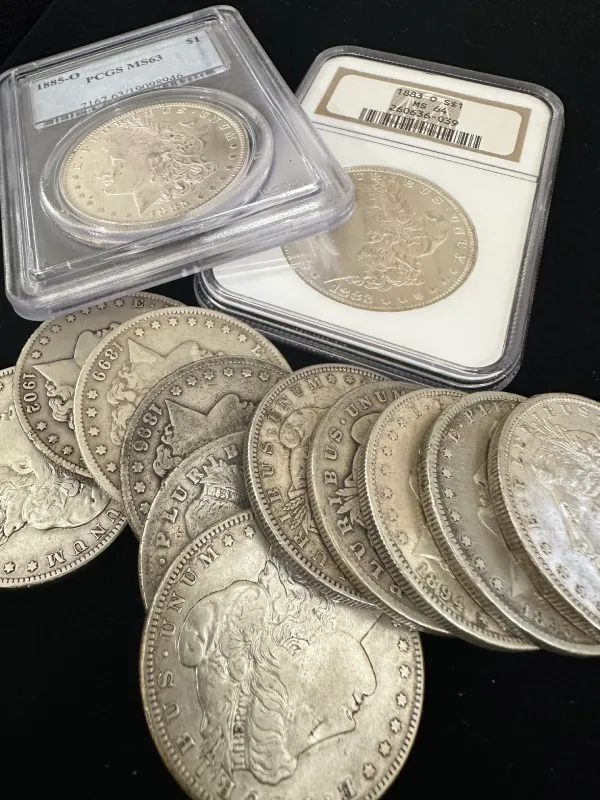
Table of Contents
How To Sell Silver Coins in 9 Easy Steps
Selling silver coins for what they are actually worth requires more than finding a buyer and accepting an offer. Follow these steps to protect your interests and maximize your return.
1. Organize and Inventory Your Coin Collection
Lay out your coins and group them by type: junk silver, silver dollars, bullion rounds, proof sets, or foreign coins.
Record the denomination, date, mintmark, and approximate condition of each piece. This prevents you from accidentally selling a rare coin at bulk melt price and helps you communicate clearly with buyers and appraisers.
Photograph both sides of any coins that appear to be in exceptional condition or that you suspect could carry a numismatic premium. This provides you with a visual record for insurance purposes and will be needed if you decide to sell silver coins online.
2. Check the Current Spot Price of Silver
The spot price of silver is the real-time market price per troy ounce on global commodities exchanges.
Always check the current price before any buyer conversation. Most dealers offer 80 to 90% of melt value for common silver, so knowing spot price helps you evaluate whether an offer accurately reflects the selling price of silver coins in the current market.
Read our expert guide to learn how to sell silver bullion for the best price to learn more.
3. Determine Which Coins Are Worth More Than Melt Value
Many silver coins trade at or near melt value, but a significant subset carries a numismatic premium.
Key-date Morgan and Peace dollars, early American silver, high-grade proof coins, and PCGS or NGC certified examples can be worth far more than their silver content. Identifying these before you sell is essential to avoiding serious financial loss.
4. Research Coin Price Guides and Market Value Trends
Consult The Official Red Book and the PCGS or NGC online price guides for retail value estimates. Keep in mind that dealer buy prices typically run 60 to 80% of retail.
For the most accurate picture of current market value, review recent realized prices achieved at major auctions.
5. Get a Professional Coin Appraisal
A knowledgeable numismatist can identify key dates, variety coins, and hidden value you might miss on your own. Appraisals for sale purposes are often free from dealers who also make purchase offers, though you are never obligated to sell.
Look for appraisers who hold membership in the American Numismatic Association or the Professional Numismatists Guild.
6. Have Rare Coins Graded
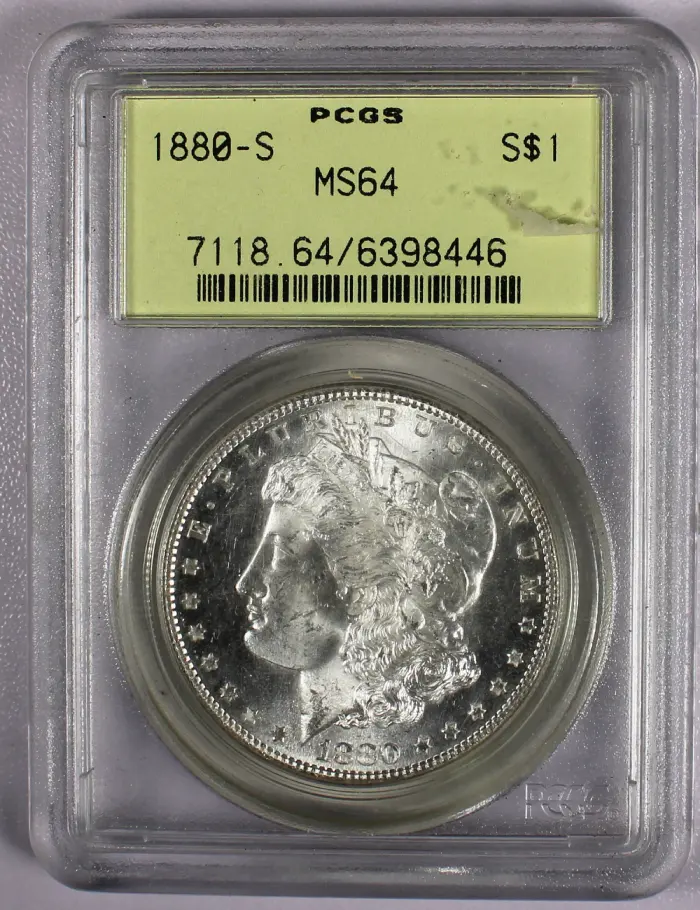
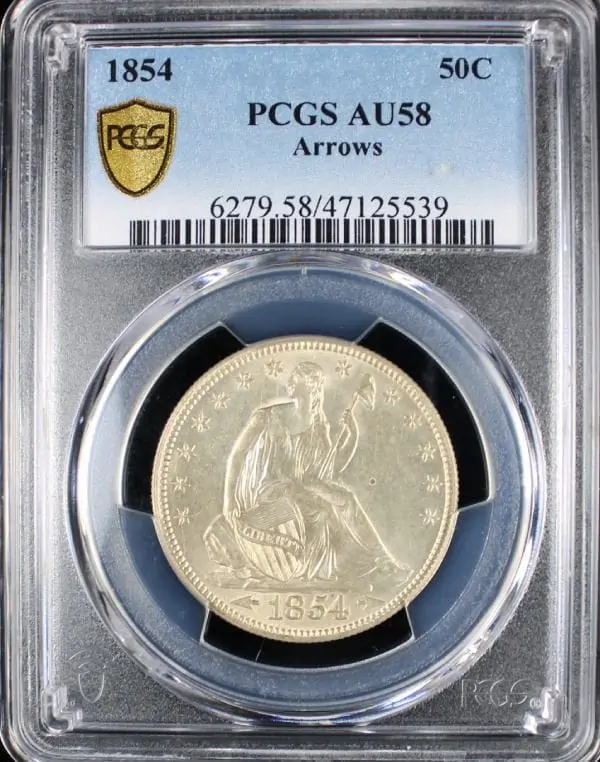
For high-grade or key-date coins, submitting coins to PCGS or NGC for grading before selling is worth serious consideration. Both services authenticate coins, assign a grade on the 70-point Sheldon scale, and seal the coin in a tamper-evident holder.
Certified coins command stronger buyer confidence and typically sell for more than raw coins of comparable quality. For lower-value coins, however, grading is not worth the expense.
7. Decide on a Selling Venue
Match the venue to what you are selling. Junk silver and bullion move efficiently through local dealers or online precious metal buyers. Rare or high-grade numismatic coins often perform best at major auction houses or through certified coin dealers.
Choosing the wrong venue for your coins can cost you considerably, so consider your options carefully.
8. Get Multiple Quotes Before You Sell Silver Coins
Never accept the first offer you receive. Contact at least three buyers, ideally a local coin shop, an online dealer, and a coin show dealer if possible.
Dealer buy prices for the same coin can vary by 20 to 40% depending on inventory needs and market knowledge. Document every offer in writing before making a decision.
9. Ensure Safety and Secure Transactions
Meet in-person buyers at public locations such as a bank lobby or established coin shop, but never at your home. For remote sales, use fully insured, tracked shipping such as USPS Registered Mail.
For high-value transactions, request payment by wire transfer or bank-verified cashier’s check. Always make sure that both you and the buyer are comfortable with the terms before finalizing the sale.
Is Now a Good Time To Sell Silver Coins?
As of early 2026, silver is trading in the $70 to $90 per troy ounce range after briefly heading over $100, a level much higher than where it spent most of the past several years.
A year ago, silver hovered near $30 to $32 per ounce before a sharp second-half rally, and 10 years ago, it traded in a $14 to $16 band for much of 2021 and 2022. This shows a clear upward trend, but no one can say for sure how long it will last.
Industrial demand from solar manufacturing, electric vehicles, and electronics has expanded steadily, and investment demand remains firm amid persistent inflation concerns.
For sellers who have been waiting for a favorable moment, current prices represent one of the strongest opportunities of the past decade.
Where To Sell Silver Coins?
Deciding where to sell silver coins is a decision that should not be taken lightly. Each selling venue offers a different balance of price, speed, and convenience, and the right choice depends heavily on what type of silver coins you have.
Understanding what each option offers before committing will help you avoid leaving money on the table.
Local Coin Shops
Local coin shops offer immediate payment and face-to-face evaluation with no shipping risk involved. Their buy prices are typically lower than other venues because dealers need margin to resell inventory, but for speed and convenience, they are hard to match.
Prioritize shops with long track records, strong reviews, and owners who hold ANA or PNG membership.
Online Marketplaces
Sites such as eBay puts your coins in front of a nationwide pool of competing buyers, which can drive prices well above dealer offers for numismatic material.
The tradeoff, however, is the effort required for photography, accurate descriptions, listing fees, shipping logistics, and buyer communication.
Online Coin and Precious Metal Dealers
National buyers often post live buy prices online and are highly competitive for bullion-type silver, such as American Silver Eagles, generic rounds, bars, and junk silver bags.
When selling silver coins online to a dealer, the process is straightforward, payment is reliable, and you ship directly from home without in-person meetings. Many people consider an online sale to be the best way to sell silver coins today.
Auction Houses
Major houses such as Heritage Auctions and Stack’s Bowers Galleries can be a strong venue for rare, high-grade, or historically significant coins.
Seller commissions range from 0 to 15% depending on the house and material value, and sales run on fixed schedules. For exceptional coins, the competitive premium achieved typically outweighs those costs.
Private Investors
Selling directly to a collector or precious metal investor eliminates the middleman and can yield a strong net price. Coin club meetings, numismatic conventions, and PCGS or NGC online forums are good places to find serious private buyers.
The tradeoff is a longer sales cycle and the need to vet buyers carefully before any transaction.
Understanding the Factors That Determine Silver Coin Value
Silver coin values are driven by a combination of metal content and, for collectible pieces, several numismatic factors that can push prices far above melt value. Understanding which factors apply to your coins helps you identify where real value lies.
Silver Content and the Current Price of Silver
Melt value is the floor price for any silver coin and is found by multiplying silver weight (not coin weight) in troy ounces by the current spot price.
Pre-1965 dimes contain 0.07234 troy ounces, quarters contain 0.18084, half dollars contain 0.36169, and Morgan and Peace dollars contain 0.77344. Modern American Silver Eagles contain exactly one troy ounce of .999 fine silver.
Coin Condition and Grade
For numismatic silver coins, condition can affect value more than any other single factor. Coins are graded on the 70-point Sheldon scale, and the difference between grades can be dramatic.
A common-date Morgan dollar in MS-63 might retail for $150, while the same coin in MS-66 could bring several thousand dollars. Professional grading by PCGS or NGC removes subjectivity for high-value pieces.
Date, Mintage Numbers, and Mintmarks
The date and mintmark indicate original production volume and which facility struck the coin, both of which directly affect scarcity.
The 1893-S Morgan dollar, with only 100,000 struck, is among the most valuable in the series. The 1921 Morgan, with over 44 million produced at Philadelphia alone, typically trades near melt in worn grades.
Rarity
A coin can be rare because most of its mintage was melted, heavily circulated, or simply lost to time.
PCGS and NGC population reports catalog every coin each service has certified, making them the most reliable tool for assessing how many examples actually survive in collectible condition.
Collector Demand
For numismatic silver coins, even genuine rarity translates to modest prices without an active collector base pursuing the series. Popular series such as Morgan dollars, Walking Liberty half dollars, and early American silver consistently attract competitive bidding.
Demand shifts over time, so tracking recent auction results is the good way to gauge where collector interest currently stands.

Common Silver Coins Worth Money
Collectors and investors often seek out pre-1965 silver coins, which generally contain 90% silver and hold value above face value. Key U.S. coins include:
- Roosevelt Silver Dimes: 1946–1964 Roosevelt dimes are valued for silver content and condition.
- Mercury Silver Dimes: 1916–1945 Mercury dimes are priced for design and rarity in higher grades.
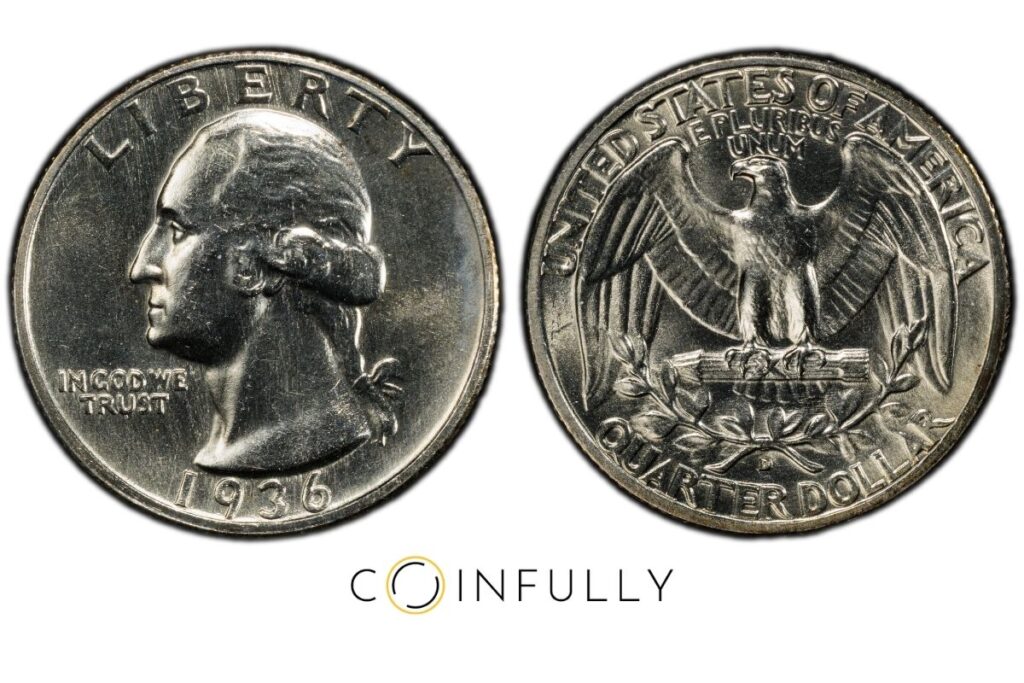
- Washington Silver Quarters: 1932–1964 Washington quarters are widely collected; some rare dates carry numismatic premiums.
- Walking Liberty Half Dollars: 1916–1947 Walking Liberty half dollars are notable for beauty and silver content. Rare dates can be especially valuable.
- Franklin and Kennedy Half Dollars: 1948–1963 Franklin half dollars and 1964 Kennedy half dollars are valuable for silver and collector interest.
- Morgan and Peace Dollars: 1878–1921 Morgan silver dollars and 1921–1935 Peace silver dollars are sought after for rarity and collector value.
- American Silver Eagles: These modern bullion coins contain 1 troy ounce of .999 fine silver and are widely traded.
Common Mistakes To Avoid When Selling Silver Coins
Selling below melt value is the most common error by far. It happens when sellers skip the step of calculating melt value before negotiating.
Selling numismatic coins as junk silver is a costlier version of the same mistake. For example, a 1932-D Washington quarter buried in a bag of pre-1965 silver is worth hundreds of times its melt value as a key date.
Cleaning coins is a damaging and irreversible error. It removes natural patina, mars surfaces, and can render a gradable coin unable to be graded. Never clean coins before selling them.
Accepting the first offer and selling in haste are closely related mistakes that routinely cost sellers money. Take the time to get multiple quotes and, unless immediate liquidity is essential, avoid rushing a transaction during a period of price weakness.
Get a Free Coin Appraisal From Coinfully
Coinfully removes the uncertainty and stress that typically accompany selling silver coins by combining expert appraisal services with unmatched personal attention.
If you have silver coins to sell, we make it easy to find out what they are worth before you commit to anything.
Our free online coin appraisal lets you submit photos and details from anywhere in the country, and our team of professional numismatists will provide a detailed, no-obligation, certified assessment.
Should you decide to sell to us, your shipment will be fully insured by Lloyd’s of London every step of the way.
For larger or historically significant qualifying collections, our concierge at-home appraisal service brings our experts directly to you for a thorough, in-person evaluation with no shipping risk.
If you decide to sell, we’ll complete payment on the spot. If not, you walk away with a fully informed understanding of your collection’s value.
No matter which service you choose, the appraisal is free, and there is never any pressure to sell. If you’d like to learn more about either appraisal service or would like to speak with an numismatic expert about your coin collection, contact us today, or give us a call at (704) 621-4893.
Frequently Asked Questions About How To Sell Silver Coins
What are silver coins worth?
Silver coins are worth at minimum their melt value, which is silver weight in troy ounces multiplied by the current spot price. Many coins carry additional numismatic value based on condition, rarity, and collector demand. Pre-1965 U.S. coins are 90% silver, and American Silver Eagles contain 1 troy ounce of .999 fine silver. A professional appraisal is the most reliable way to establish accurate value.
Where is the best place to sell silver coins?
The best venue depends on what you have. Bullion and junk silver sell efficiently through local coin shops or online precious metal dealers. Rare or high-grade coins often bring stronger prices at major auction houses or through certified coin specialists. Getting quotes from multiple buyer types before deciding is the most reliable way to ensure you receive fair market value.
Do silver coins always increase in value?
Silver coins do not always increase in value. Melt value rises and falls with the spot price of silver, which moves on supply, demand, and macroeconomic conditions. Numismatic coins add collector demand as a second value driver, but those markets fluctuate as well. Silver has historically preserved purchasing power over the long term, but short-term price movement in either direction is common.
Can you cash in silver coins at the bank?
Most U.S. banks will not buy silver coins or pay based on silver content. If they accept them at all, it is typically at face value only, which is well below melt value for most silver coins. To receive fair market value, take your coins to a reputable coin dealer, a precious metal buyer, or an established auction house that handles coins and bullion.
Wyatt McDonald President & Co-Founder of Coinfully. A student of numismatics and trained in the ANA Seminar in Denver, Wyatt is the face of Coinfully and a true expert. After spending a decade buying coins over the counter at a coin shop, he knew there had to be a better way, for everyone involved.
Get an Appraisal
Think you’re onto something big with your collection? Let’s talk…


 401 Hawthorne Ln, Ste 110-323 - Charlotte, NC 28204