

A Practical Guide for Heirs To Protect Both the Coins and Their Value
“A loved one passed away and left all of these coins to me. I don’t know where to start.” That’s exactly why Coinfully exists: we believe every inheritor and collector deserves straightforward, honest guidance about their coins and the value they hold.
Selling a large collection is a big chore even for experienced collectors. A huge amount of time and energy is needed to organize, sort, value, transport, and compare prices, especially when this is often just one of the many aspects of an estate that you’re dealing with.
If you inherited a coin collection, know that you don’t have to become a coin expert, and you don’t have to figure it all out today. In fact, the most important early steps are things you should not do. This guide explains the three big ones.
To learn the true value of your inherited coin collection, start with a free online coin appraisal from Coinfully.
Once you understand what your coins are worth in today’s market, you can decide whether to hold onto them or sell your coins online to us. Either way, some of your burden is removed, and you walk away with a free appraisal that can be used for selling, estate, and insurance purposes.
Table of Contents
First, Know That You Don’t Have To Do the Heavy Lifting
Before we get to the three mistakes, let’s acknowledge that inheriting a coin collection can be overwhelming, especially when you’re not familiar with the hobby and what it entails.
“It’s Going To Take Me Weeks To Make a List”
One of the most common things people tell us is some version of this: “I inherited 1,500 coins. It’s going to take me weeks to make a list.” They’re right that doing it alone, by hand, and with no numismatic background would be an exhausting slog.
Sorting, researching, valuing, transporting, and comparing offers for hundreds or thousands of coins takes significant time, even for experienced collectors. When you’re also managing the responsibilities of an estate, it can quickly become overwhelming.
So, here’s the first thing to let go of: the belief that you must catalog, organize, and understand everything before anyone can help you. You do not. That expectation is exactly what can turn an inheritance into a source of dread.
You Have Options
Depending on the collection, a local coin shop can be a convenient option for both appraising and selling, particularly if the collection contains fairly common coins.
Many online coin-buying services, including Coinfully, offer free coin appraisals. Some require you to send in your coins for evaluation, and others only ask that you provide photos. Terms and policies vary, so research your options before choosing the one that makes the most sense for you.
For large or historically significant qualifying collections, Coinfully offers a concierge at-home appraisal service, where a numismatic expert travels to you, evaluates the collection on site, and handles the heavy lifting in person.
Your job is to keep the coins safe until then, which brings us to the three things you should avoid.
#1: Don’t Clean or Polish the Coins
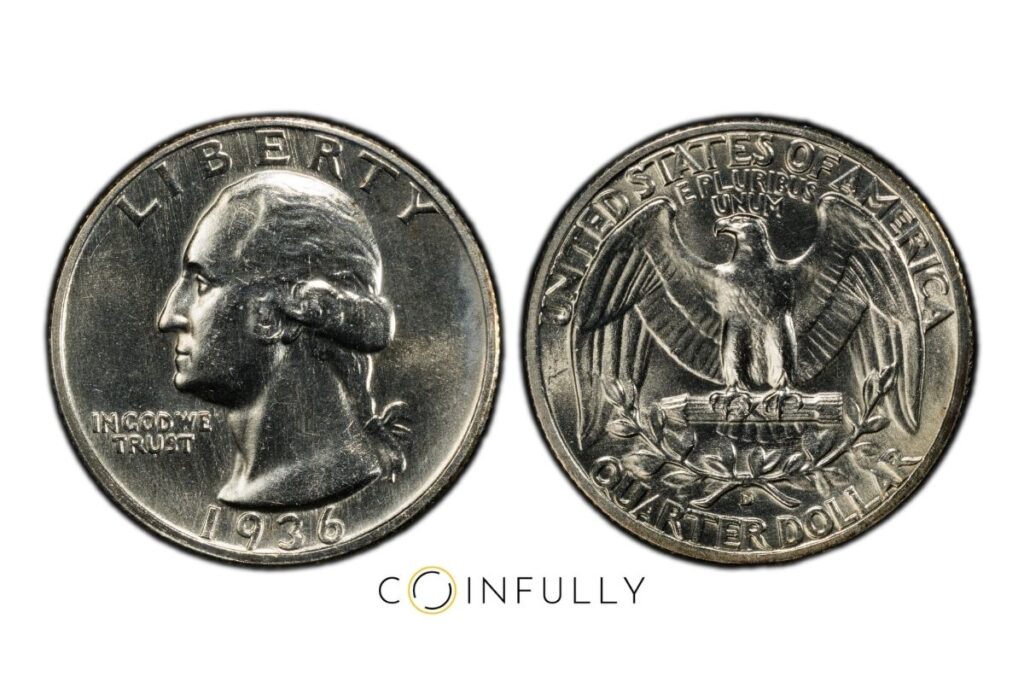
Cleaning coins is the single most common and most expensive mistake inheritors make.
Why “Making Them Look Nice” Destroys Value
When you’re trying to honor a loved one and present their collection at its best, cleaning the coins feels like the respectful, helpful thing to do. In almost every other situation, cleaning something increases its value. Coins are the exception.
Cleaning a coin with polish, a cloth, baking soda, or even a gentle rinse and rub drags tiny particles across the surface and leaves permanent fine scratches called hairlines. It strips away the original surface and natural toning that collectors prize most.
To a trained eye, a coin that has been “shined up” isn’t impressive; it’s damaged. Grading services flag cleaned coins with a reduced grade, which can erase a large share of a coin’s value in a single wipe. Worst of all, the damage cannot be undone.
What To Do Instead
Leave every coin exactly as you found it, grime, toning, dust, and all. What looks like dirt to you often tells an expert important things about the coin and proves the surface is original.
If a coin looks dark or dull, resist the urge to help it. The best way to protect its value is to not touch it.
#2: Don’t Re-Sort, Rehouse, or Overhandle Them
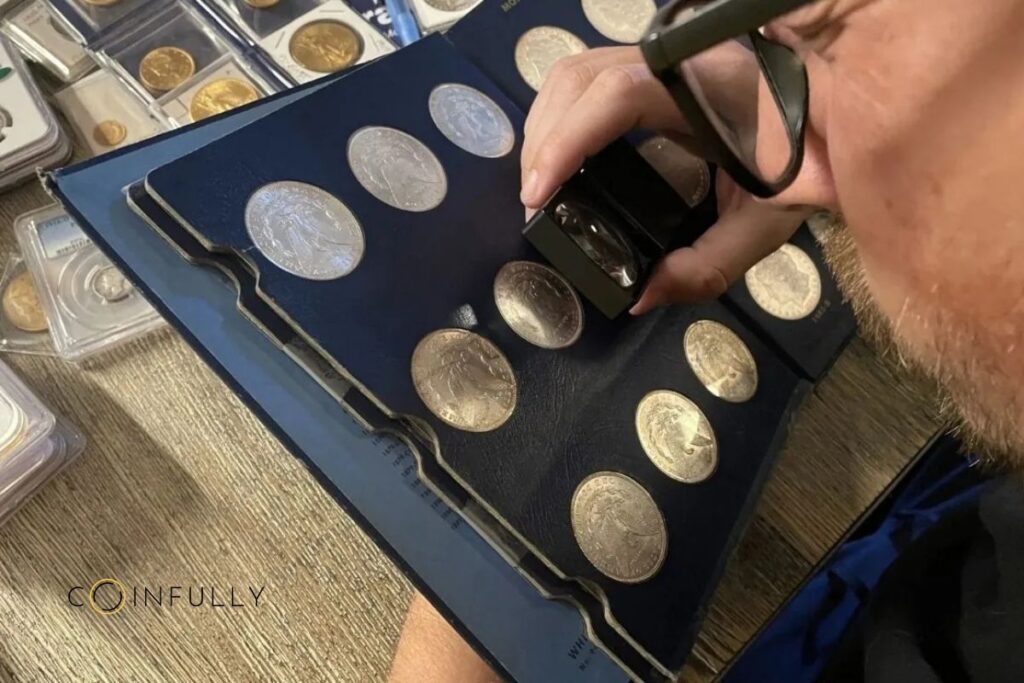
The second instinct is often to get organized by moving the coins into tidy new binders, sorting them into fresh holders, or consolidating everything into one neat container. Please pause before you do. Well-meaning reorganization is a leading cause of accidental damage.
The Hidden Danger of PVC Plastic
Many soft, flexible plastic holders, pages, and flips sold at craft and big-box stores are made with PVC. Over time, PVC breaks down and leaves a sticky green residue on coins that slowly damages their surfaces.
Moving your loved one’s coins into a “nicer” soft-plastic album can quietly ruin them over months.
Safe storage uses inert, archival materials such as hard plastic capsules, Mylar flips, or cardboard holders, but unless you’re certain what you have, the safest move is to leave the coins in their current holders and let a professional advise you.
Leave Slabs, Flips, and Original Packaging Alone
If some coins are sealed in hard plastic grading holders, often called slabs, don’t crack them open. That sealed holder carries a certification that adds value, and breaking it destroys that protection and can damage the coin.
The same goes for original mint packaging, old proof and mint sets, dealer envelopes with handwritten notes, and coins tucked into an old album. These can carry value, history, and useful information. Rehousing can strip that away, so when in doubt, leave the coins as they are.
How To Handle Coins if Necessary
It’s best to handle coins as little as possible. When you do have to handle them, wear cotton gloves and hold them only by their edges, never touching the faces. The oils on your fingertips can leave permanent marks over time.
Work over a soft towel so that a dropped coin has a gentle landing, and avoid sliding coins against one another. Gentle and minimal is the rule.
#3: Don’t Try To Inventory Everything Yourself
Inheritors sometimes feel as if they have to handle everything alone, but that’s why Coinfully was created.
Inherited coin collections often come with old handwritten notes, boxes of albums, and sometimes coded shorthand the original collector used to annotate values or coin types. That can be genuinely difficult to decipher without help.
Why the DIY Catalog Is a Trap
Trying to identify, research, and value every coin yourself isn’t just exhausting; it’s risky. Without training, it’s easy to overlook a genuinely valuable piece, misjudge condition, or handle coins too much in the process and cause damage.
So, hours of stressful work can actually lower the collection’s value rather than protect it. It’s okay to not know what a 1909-S VDB cent looks like or what the difference is between a Morgan and Peace dollar. That knowledge is a specialist’s job.
AI can be helpful, but using it to inventory a collection is often hit or miss. We’ve seen pages upon pages of AI-generated inventory that inheritors have spent weeks generating.
Unfortunately, this is often work that needs to be redone because AI models tend to provide inaccurate information, create duplicates, and catalog coin collections in unnecessarily technical ways.
The simplest route to organizing is taking pictures. Grouping similar coins together works best. You can group them in grids and small groupings. As long as the date and mintmark are visible, those pictures will be vastly more helpful to your appraiser than AI-generated inventory.
Let a Professional Do the Organizing
This is where the right help changes everything. For qualifying collections, Coinfully’s concierge team comes to your home, inventories the collection properly, and appraises it on site so you never have to make that dreaded list.
A Coinfully expert can handle all of the sorting, verification, and valuation on site, with full transparency and time for your questions. If you decide to sell, payment is issued on the spot, and we pack up and take the collection with us.
For smaller collections, you can simply send a few photos or a rough inventory and let the experts guide you from there. Either way, the listing and valuing become someone else’s responsibility, not yours.
Don’t Rush To Sell to the First Buyer
Following your appraisal, you might be considering selling your coins quickly just to be done with it. That’s your decision to make, but remember that you are in no way obligated to accept the first offer you receive.
It’s often best to gather several offers and compare the results at your leisure before making a decision. Consider the business’s reputation, any fees involved, and payment speed and security.
How Coinfully Can Help With an Inherited Coin Collection
Coinfully was built to help people navigate these situations and to keep the entire process as streamlined and transparent as possible. Coinfully is a small but mighty family-owned-and-operated company, and we’re experts at navigating the intricacies of inherited collections.
Our goal is to provide you with the knowledge you need to make the best decisions regarding your coins. Whether it’s equitable distributions, trusts, or valuations for probate, we’ll handle everything.
For qualifying large or historically important collections, Coinfully’s concierge at-home coin appraisal service sends a numismatic expert to your home to inventory, appraise, and make an offer on site, so you skip the heavy lifting entirely.
For everything else, a simple, free online appraisal from a few photos does the job. Either way, you get honest, expert guidance with zero pressure to sell.
Coinfully is an accredited member of the American Numismatic Association and an authorized, registered dealer with both PCGS and NGC, holding an A+ BBB rating.
Mail-in packages are fully insured by Lloyd’s of London and opened under 4K security cameras, and payment is issued the same business day your collection is verified.
You Don’t Have To Figure This Out Alone
Inheriting a coin collection can feel like being handed a test for which you never studied, especially while you’re grieving, but protecting that collection is simple when you know the basic steps to take.
You have options available that can handle everything from sorting and inventories to appraising your coins. Professionals who deal with coin collections every day can help you carry the load.
Get a free inheritance consultation and free, no obligation appraisal on your collection by contacting our team at Coinfully.com.
Frequently Asked Questions About Inherited Coin Collections
I inherited a coin collection and feel completely overwhelmed. Where do I start?
Start by doing very little. Keep the coins safe and untouched, resist the urge to clean or reorganize them, and don’t feel you must inventory everything yourself. Local coin shops, online services, and at-home appraisals are available to help you understand the collection and how much it’s worth.
Should I clean or organize the coins to make them presentable before an appraisal?
Cleaning permanently damages coins and can drastically reduce their value, and reorganizing them risks handling damage or exposure to harmful PVC plastic. Experts would much rather see a collection exactly as it was left. Presenting them “nicely” almost always works against you, so the most helpful thing you can do is leave them as they are.
Do I really have to make a list of all 1,500 coins?
You don’t have to create an inventory if your collection qualifies for our concierge at-home service, where a numismatic expert inventories and appraises everything in person. For smaller collections, a set of photos or a rough list is plenty to get started, and the experts guide you from there. You don’t need to catalog or try to price anything yourself.
What is the at-home appraisal service, and how do I know if I qualify?
Our at-home appraisal service is a concierge service where a Coinfully expert travels to you, appraises the collection on site, and makes an offer before leaving, all with no pressure to sell. However, it’s designed for large or historically important collections only. The easiest way to find out if you qualify is to reach out and describe roughly what you have.
How do I avoid being taken advantage of as an inheritor?
Don’t rush, and don’t accept the first convenient offer. Get a professional appraisal from accredited experts first so you actually know what the collection is worth before deciding anything. Understanding the true value is your best protection against being lowballed during a vulnerable time.

