Six Mistakes To Avoid When Leaving a Coin Collection to Heirs
Don't Leave the Future of Your Collection To Chance

Apr 7th, 2026 · 4 Minute Read
Coin collections are often built over many years, sometimes decades. Along the way, collectors invest time, money, and careful research into assembling pieces that reflect history, rarity, and personal interest.
When the time comes to pass that collection to the next generation, however, heirs may not fully understand what they have inherited, and that valuable legacy can become a burden.
Without clear preparation, valuable coins can be overlooked, misidentified, or sold improperly. Avoiding a few common mistakes now can make all the difference when leaving a coin collection to heirs.
Not exactly sure how much your coin collection is worth?
A free online coin appraisal from Coinfully is the best place to start. You’ll receive a detailed evaluation with no obligation to sell whatsoever. Your appraisal can be used for sales, insurance purposes, estate planning, and more.
Why Leaving a Coin Collection to Heirs Can Create Problems
Coin collections can be surprisingly difficult assets for heirs to manage. Unlike cash, stocks, or real estate, the value of coins is not immediately obvious.
A single coin might be worth $12 or $12,000 depending on its date, mintmark, condition, and current market demand. Grading alone can shift value dramatically: a coin graded MS-65 can be worth many times more than the same issue graded MS-63.
Heirs unfamiliar with these distinctions may not recognize which pieces are truly valuable.
Estate settlements can also require quick decisions, which increases the risk of coins being sold improperly or overlooked entirely.
Without a clear inventory, documentation, or guidance from the collector, an inherited coin collection can be liquidated hastily, divided unevenly, or lost to opportunistic buyers who recognize what the heirs do not.
Mistake #1: Failing To Create a Clear Inventory of the Collection
One of the most consequential oversights a collector can make is never putting together a written inventory. Without one, heirs have no way to know what coins are in the collection, where they are stored, or what they are worth.
An inventory should include each coin’s denomination, date, mintmark, grade (whether certified or estimated), purchase price, and estimated current value. Note the holder type as well: raw coins, NGC-slabbed, PCGS-certified, and so on.
Spreadsheet software works well for this purpose, and the file should be updated whenever the collection changes. A printed copy kept alongside the collection itself ensures heirs can access it even without knowing where your digital files are stored.
A well-documented inventory is especially valuable should you or your heirs decide to sell coins online in the future. Including clear images of each coin is smart as that type of documentation won’t need to be updated unless you add to your collection or sell certain items.
Mistake #2: Not Separating Bullion From Collectible Coins
Bullion coins and collectible coins serve entirely different purposes and must be treated differently during estate settlement.
A 1-ounce American Gold Eagle bought for its metal content has a value that will fluctuate with the spot price of gold, which is currently quite high, while a key-date Morgan dollar or a high-grade Saint-Gaudens double eagle may command a substantial numismatic premium far above its melt value.
When the two are mixed together without labeling, heirs may assume that all of the coins are bullion and sell genuinely rare pieces to a metals dealer for only their weight in silver or gold.
Clearly labeling and separating bullion holdings from the collectible portion of the collection removes this risk entirely.
Mistake #3: Leaving the Collection Disorganized
A disorganized collection forces heirs to sort through loose coins, unlabeled albums, mixed holders, and scattered storage boxes with no context for what they are looking at.
Beyond being time-consuming, a disorganized collection is also vulnerable to loss, as small, high-value coins can easily be overlooked or misplaced during the process of sorting.
Organizing by series, denomination, or country and using labeled coin folders, albums, or certified holders gives heirs a fighting chance of understanding what they have inherited.
Each storage container should be labeled clearly on the outside. If the collection spans multiple locations, a master note indicating where everything is stored should accompany the inventory.
Mistake #4: Assuming Heirs Understand Coin Values
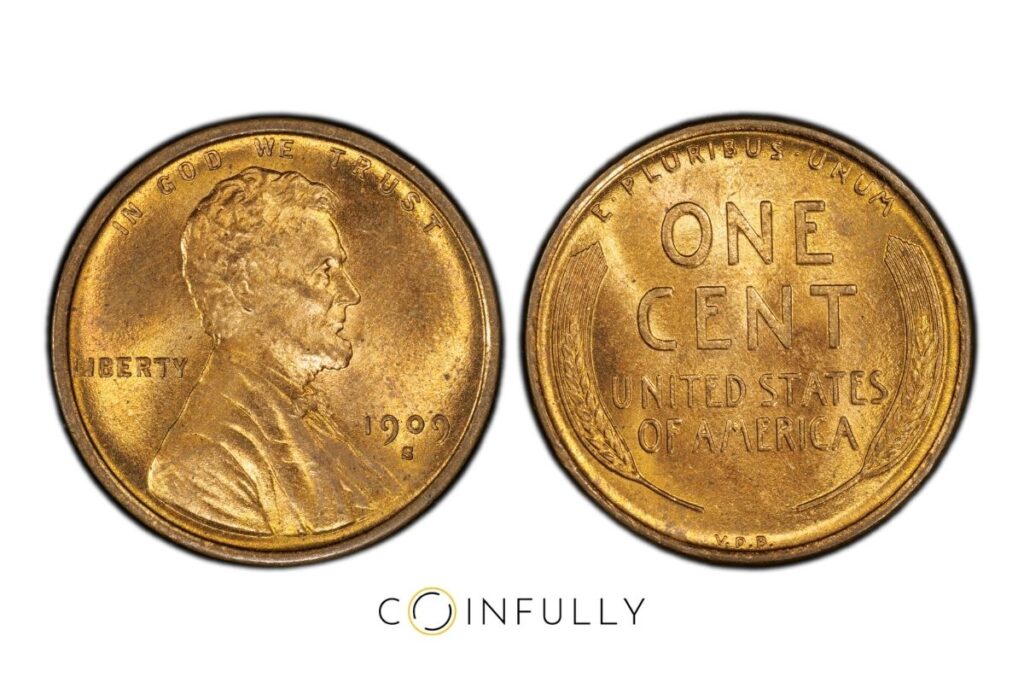
Most people outside the hobby have no frame of reference for numismatic value and have no idea how to value a coin collection.
Even heirs who know a little bit about coin collecting may not realize that a worn 1909-S VDB Lincoln cent is worth exponentially more than a pristine common-date cent from the same era or that a Walking Liberty half dollar in Fine condition and the same coin in Mint State represent a vast price difference.
Collectors sometimes assume their family has absorbed enough knowledge through casual conversation to understand these distinctions and that they know how to sell an inherited coin collection when the time comes. In practice, this rarely is true.
Leaving annotated notes on key pieces or flagging the top 10 most valuable items in the inventory gives heirs specific information they can act on rather than guessing at value.
Mistake #5: Not Getting a Professional Coin Collection Appraisal
A professional coin collection appraisal establishes a defensible, documented value for the collection and gives heirs a baseline from which to make informed decisions.
This matters for estate tax purposes, for equitable division among multiple heirs, and for insurance coverage during the transition period.
An appraisal conducted by a qualified numismatist carries far more weight than an informal valuation from a local coin shop.
Keep the appraisal report with your estate documents and update it every few years, since coin values fluctuate with market conditions, new population data from grading services, and shifts in collector demand for particular series or types.
Mistake #6: Leaving No Written Guidance for Heirs
Even a well-documented, neatly organized collection can create confusion if heirs have no instructions on what to do with it.
Written guidance should cover where the collection is physically stored, including any secondary locations such as bank safe deposit boxes or off-site storage.
It should also state your wishes clearly as to whether the collection should be kept intact, divided among specific heirs, or liquidated.
If you prefer it be sold as a complete collection rather than broken apart piece by piece, say so in writing, since selling as a whole often yields a better result for a curated collection than piecemeal retail.
Include the name and contact information of a trusted dealer, appraiser, auction house, or numismatic service you would recommend so that heirs do not have to start that search from scratch during a difficult time.
Simple Steps You Can Take Now
The mistakes above are avoidable, and addressing them does not require completing everything at once. Starting with even one or two of the steps below will put your heirs in a significantly better position than most collectors leave them in.
Talk to Your Heirs About Your Coin Collection
A direct conversation with your heirs can prevent more confusion than almost any other single step.
Explain that the collection includes pieces of varying value, that bullion and collectibles should be handled differently, and that certain coins should not be sold without getting a professional opinion first.
Point out where the collection is stored, mention the existence of any certified or especially valuable pieces, and introduce them to the inventory if you have one. Discuss their options regarding what to do with a large coin collection, and share as much advice as possible.
Keep Coins Properly Stored and Organized
Store coins in archival-quality holders, albums, or flips that are free of PVC, which can cause irreversible chemical damage over time.
Keep certified coins in their original PCGS or NGC slabs, and never clean or dip coins, as even light cleaning destroys numismatic value and cannot be reversed.
Use acid-free storage boxes, maintain stable humidity with silica gel packets, and store high-value pieces in a fireproof safe or bank safe deposit box.
Label every container clearly so heirs do not have to open and examine holders to figure out what is inside.
Maintain a Detailed Inventory
Build your inventory as a spreadsheet with columns for date, denomination, mintmark, series, grade, certification number (if applicable), holder type, purchase price, estimated current value, and storage location.
For certified coins, the PCGS or NGC certification number allows heirs to verify grade and look up population data independently. Flag your 10 most valuable pieces prominently so they receive extra scrutiny before any sale.
Keep both a digital copy backed up to a secure cloud service and a printed copy stored with the collection itself. Review and update the inventory at least once a year, adding new acquisitions and removing any coins that were sold or traded.
Update Appraisals Periodically
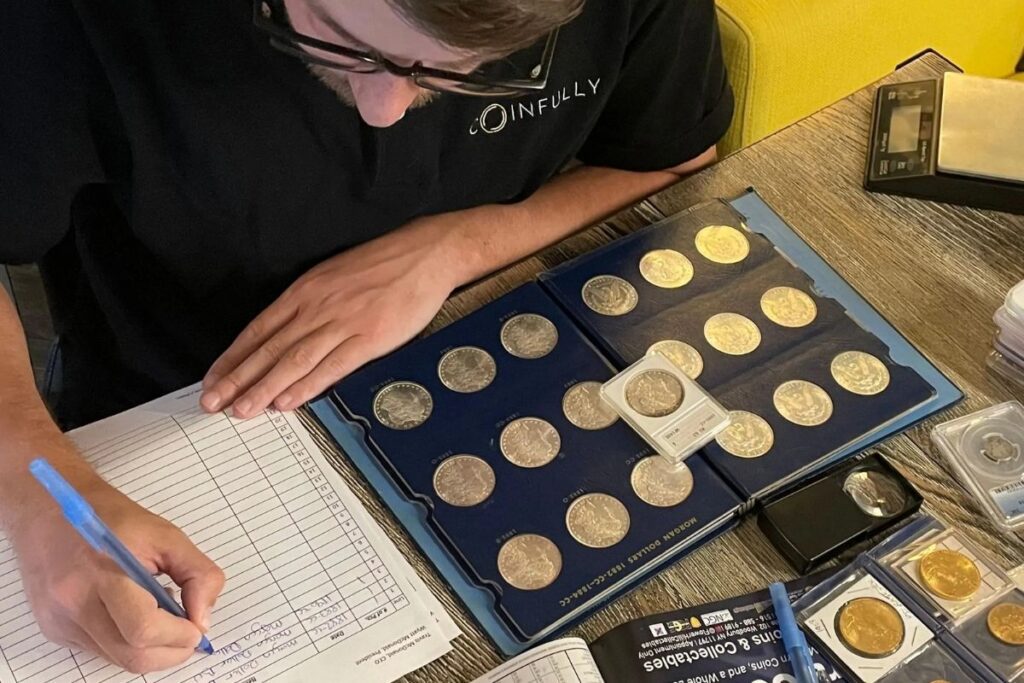
Coin values shift over time as collector demand evolves, registry set competition intensifies, and population reports from grading services change what was once considered rare.
Valuable Morgan dollars that commanded strong premiums a decade ago may have softened, while previously overlooked type coins or early American coppers may have appreciated sharply.
Having the collection appraised every three to five years ensures that your estate documents reflect current market realities rather than outdated figures. Significant additions to the collection warrant an updated appraisal as well.
For insurance purposes, an appraisal older than five years may be insufficient to support a full replacement value claim in the event of theft or loss.
Store Coin Collection Documentation With Estate Records
Your inventory, appraisal reports, purchase receipts, and written guidance for heirs should all be stored together in a location your executor and heirs can access without difficulty.
If your estate documents are kept with an attorney, provide that office with copies of the collection documentation as well.
A sealed envelope labeled clearly and kept in a fireproof home safe alongside your will, trust documents, and insurance policies is a practical solution.
Tell your executor and at least one trusted heir exactly where this documentation is located. Documentation that exists but cannot be found when it’s needed provides no protection at all.
Get a Free Coin Collection Appraisal From Coinfully
Coinfully’s free online coin appraisal makes it easy to establish a clear, defensible value for your collection before it’s ever passed down.
You can begin by submitting high-resolution images or a detailed inventory. One of our experienced numismatists will evaluate each coin based on condition or grade, rarity, and current market demand.
You’ll receive a comprehensive appraisal report that can be used for estate planning, insurance documentation, or guiding your heirs, along with a transparent purchase offer if you’re considering selling. There is no obligation at any stage.
If you choose to move forward with a sale, we provide fully insured shipping and issue payment promptly after verification using advanced imaging systems.
For larger or high-value collections, an in-home appraisal can be an ideal option. If your collection qualifies, we’ll come to you to provide an expert appraisal in person. Should you decide to sell, we’ll issue payment immediately.
Protecting Your Collection for the Next Generation
The habits that make someone a dedicated collector, such as attention to detail, careful research, and a genuine appreciation for what each piece represents, are exactly the habits that translate into good estate planning for a collection.
The difference is in applying that same care to the transition itself, not just the accumulation.
Many heirs who sell collections quickly and cheaply do so not out of indifference, but out of lack of knowledge. They don’t know what they have, whom to trust, or what the collector would have wanted.
The steps outlined here close that gap. A collector who takes the time to document, organize, and communicate leaves behind not just a collection, but the context needed to honor it properly.
Ready to learn how much your collection is really worth so your heirs will appreciate the value of their inheritance? Reach out to Coinfully today for a professional coin appraisal. Remember that there is no fee involved and absolutely no obligation to sell.
If you have any questions, feel free to give us a call at 704-621-4893. We’re always happy to help.
Frequently Asked Questions
How do you determine coin collection value?
Coin value depends on grade, rarity, mintmark, and market demand. Use the PCGS or NGC price guides for rough estimates but beware that these values are typically good for insurance purposes but generally overstate what a coin can actually be sold for, sometimes meaningfully., Work with a credentialed numismatist for a formal appraisal on any collection of significant size.
How to organize a coin collection?
Sort coins by series or denomination, store them in PVC-free holders or albums, and label all containers clearly. Pair the physical organization with a written inventory so every coin is documented and accounted for.
What to do with an inherited coin collection?
Do not clean any coins. Locate any existing documentation, secure the collection, and have it appraised by a credentialed numismatist before making any decisions about keeping, dividing, or selling it.
How to sell a coin collection?
Match the method to the material. Rare or high-grade coins can perform best at auction. Bullion coins and mid-to-lower value numismatic items are best sold through an online or brick-and-mortar dealer.
Wyatt McDonald President & Co-Founder of Coinfully. A student of numismatics and trained in the ANA Seminar in Denver, Wyatt is the face of Coinfully and a true expert. After spending a decade buying coins over the counter at a coin shop, he knew there had to be a better way, for everyone involved.
Get an Appraisal
Think you’re onto something big with your collection? Let’s talk…


 401 Hawthorne Ln, Ste 110-323 - Charlotte, NC 28204