

Discover Why the Price for an Ungraded Coin Differs From That of a Graded One and When Grading Makes Sense.
“This coin is in perfect condition. I know it would grade MS65 if I sent it in.” This is a completely understandable statement. A coin can look flawless in hand, so expecting a top-tier price feels natural.
However, there’s a real and often surprising gap between what raw, ungraded coins look like and what a professional grade actually confirms. Understanding that gap, and the gamble behind chasing a perfect grade, can save you both money and disappointment.
In many cases, starting with a free online coin appraisal is a smart move. A professional evaluation will provide you with an estimated value based on current market conditions and identify any coins that could benefit from being graded.
Table of Contents
The Truth About MS65 Prices for Your Coin
Every collector wants the best price for their coins when it’s time to sell. We sometimes hear collectors say: “My coin looks pristine. Why doesn’t it value at MS65 prices?”
A coin may look beautiful in its raw and original state, but numbered grade values are strictly reserved for those coins in certified holders.
It’s possible a buyer might pay a higher premium for a coin that’s in its raw and original state, but that’s a risk the buyer is assuming when purchasing an ungraded coin for a number grade price.
When collectors realize the highest value for their coin might be realized if their coin is in a PCGS or NGC holder, the question then becomes, “Should I pay to get my coin professionally graded?”
Making an Informed Decision
Deciding whether or not to send a coin for grading is an important consideration. Even experienced dealers have been disappointed upon receiving a beautiful coin back from the grading services only to find out it graded poorly.
A coin’s appearance and a coin’s certified grade are two different things, and in today’s market, pricing is currently following the certified grade rather than eye appeal of a raw ungraded coin.
The grading system was developed by Dr. William Sheldon in 1948 and was followed by professional third-party encapsulation in the late 1980s by PCGS and NGC.
Since then, with increasing trust and confidence from collectors, it’s become the standard for verifying condition and authentication in coin collecting.
Coin Grading Provides Confidence to Both Buyers and Sellers
The market values raw coins and graded ones differently. There’s still interest in ungraded coinage, but it’s a different buying and selling experience than listing a coin in a certified holder.
Much of the difference comes down to certainty and safety. When a coin is in a graded holder, it is verifiable to the buyer. Buyers can look up the certification number on the slab label and verify the coin in the holder has been authenticated by experts.
That assurance takes a lot of risk out of the buying equation for dealers and collectors who are purchasing coins. At the same time, sellers can be confident in their listing prices with graded coins.
The Difference Between Looking Perfect and a Perfect Grade
To the naked eye, a coin can appear absolutely flawless. Professional graders, however, examine coins under 5x magnification in controlled lighting, looking for tiny contact marks, hairlines, strike weaknesses, and surface disturbances that are invisible in everyday viewing.
A coin that looks perfect at first glance may reveal a small imperfection under that scrutiny.
That single imperfection is often the difference between the highest grade and the one just below it. The confirmed grade, and therefore the value, can shift dramatically based on details most collectors may not be able to see at first glance.
Why Dealers Rarely Pay for “Potential” Value of Ungraded Coins
When a coin is raw, no one knows its true grade for certain, not even an experienced dealer.
A dealer can estimate the grade, but an estimate isn’t a guarantee. If a dealer paid Greysheet (the industry’s wholesale pricing guide) prices for a raw coin that later graded poorly, they could take a significant loss.
To remain in business and treat every seller fairly, dealers price raw coins based on their approximate grade.
- Adjectival Grades: Word descriptions like Good (G), Very Good (VG), Fine (F), Very Fine (VF), Extremely Fine (XF), and Brilliant Uncirculated (BU) rather than attempting to project Mint State.
- Mint State (MS): Is the numeric range from 60 to 70 used for uncirculated business-strike coins, where BU typically falls on the higher end of uncirculated or raw descriptive condition.
This scale may also be referred to as the Numerical Sheldon Scale, a 1-to-70 scale where 1 is a barely recognizable worn-out coin and 70 is a perfect, flawless coin.
Paying “potential” prices for an unconfirmed grade wouldn’t be sustainable, and it would ultimately mean worse and less reliable offers for everyone.
Understanding the Price Spread Between Raw and Graded Coins
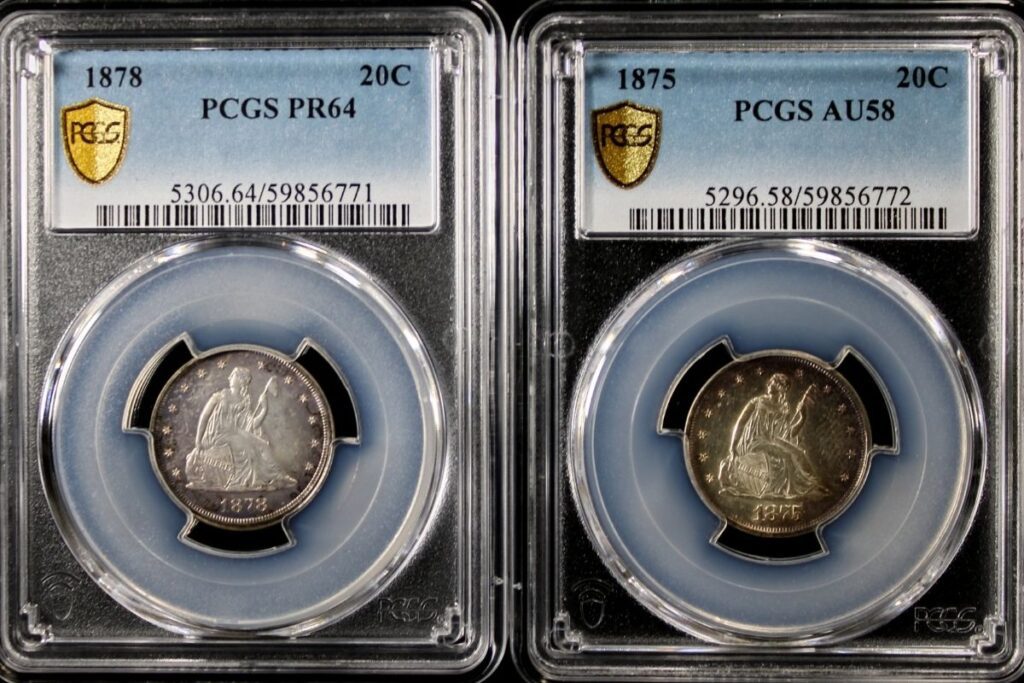
The gap between a raw, ungraded coin and the same coin in a professional slab can be quite large. What that slab represents is the reason the spread exists.
What the Slab Actually Represents
When PCGS or NGC grades a coin, they seal it in a tamper-evident holder, often called a slab, with a label stating the grade and a unique certification number.
That slab does three important things: it authenticates the coin, it locks in a professional condition assessment, and it makes the coin instantly tradeable at a known market value.
A raw coin offers little guarantee. A buyer has to trust their own eyes and factor in the cost and uncertainty of estimating the condition of the coin themselves. The slab removes that risk, and the market pays a premium for that certainty.
It could be argued that willingness to pay the grading premium is a result of unscrupulous sellers attempting to market cleaned, damaged, or counterfeit coins as high grade at high prices. Graded holders have become somewhat of an insurance policy for a coin.
This is not to say that counterfeit holders don’t exist. It’s always recommended to check the certification number on a graded holder’s label. Anyone can verify a cert number using the Verify Cert Numbers tool on the PCGS website.
How Big the Spread Can Be
The spread varies enormously depending on the coin. For common modern collector coins, a graded example in a high but not perfect grade may carry only a modest premium over the raw coin.
For the very top grade, however, the premium can be several times higher, and for scarce or key-date coins, the difference between one grade and the next can run into the hundreds or even thousands of dollars.
This is exactly why raw and graded prices are not interchangeable. The grade, confirmed by a third party, is doing a lot of the work in setting the value.
The Grading Gamble Explained
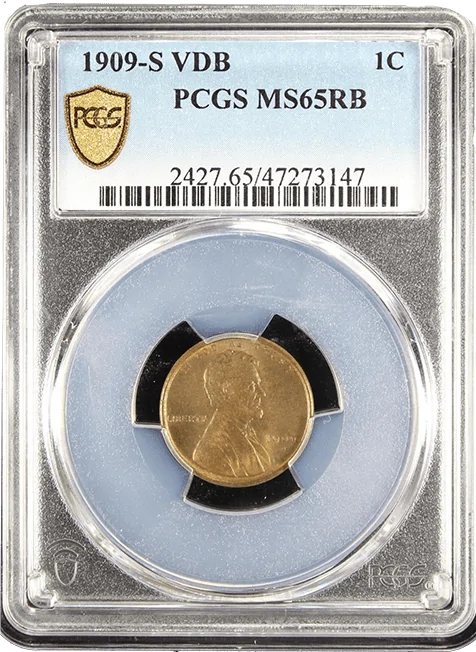
Deciding to grade a modern coin is, in a very real sense, a gamble. Grading requires paying money up front for an outcome you can’t know in advance, and the result can go either way. Walking through the math makes the risk clear.
The Math Behind a Modern Coin Submission
Imagine you have an 1883-S Morgan dollar. Approximately 6.2 million were minted at San Francisco, but very few survived in top mint-state condition.
Most of these coins circulated in the Wild West, trading between bandits, at poker tables, and jangling in cowboys boot bags. The history behind the Morgan dollar continues to drive interest and continues to make these coins highly desirable among collectors.
All of this history and circulation has rendered most surviving Morgan dollars today heavily worn or in lower grades. An 1883-S Morgan dollar in common condition trades today for around $50, with Almost Uncirculated specimens (AU50) commanding around $175 per coin.
That same coin, an 1883-S Morgan dollar, after it had been graded by PCGS and placed in a certified holder with the grade MS67 sold at auction from the Clapp-Eliasberg collection in January 2009 for $160,000.
That may sound like great news for your coin, but keep in mind that finding coins in these superb mint states is very rare, and grading is not free.
Between the cost of membership, the grading fee itself, and insured shipping both ways, a submission might cost $100 or more per coin, depending on the service level you choose.
If your coin comes back MS67, you may do very well, but if it comes back lower than expected, that same coin might be worth less than the price paid for grading.
The Truth About Modern Coins in MS Grades
For modern collector coins, MS70 is extremely common. A lot of collectors might say, “This coin is in perfect condition. It’s graded MS70,” and based on the grading scale, that is the highest condition that coin could achieve.
But, modern coins like American Silver Eagles that go straight into graded holders were never meant to be circulated, thus the grade MS70 is largely determined before the retail buyer ever owns the coin.
Most modern collector coins were never intended to be exchanged hand to hand as currency.
The reason an 1883-S in MS67 is superior in collectibility, value, and demand to an American Silver Eagle in an MS70 holder is history.
The 1883-S survived the Wild West and, against all odds, remained in near perfect condition. The American Silver Eagle in an MS70 state went straight from the mint into an MS70 holder.
Modern MS70 coins are beautiful and represent the rich history of collecting, but they never had a chance to prove themselves against circulation and active use as regular currency and instead went directly into protective casing.
That’s why the premiums for modern coins in MS70 slabs can’t compete with a genuinely rare condition, such as the 1883-S Morgan dollar in MS67.
The Costs That Add Up Beyond the Grading Fee
The headline grading fee is only part of the picture. A realistic submission can also include a membership requirement with the grading service, insured shipping to and from the grader, optional labels or tiers, and the value of the time you spend waiting weeks for a result.
When you total these against the possible upside, many modern coins simply can’t attain much greater values than they do in their raw state.
When Grading Actually Makes Financial Sense
Although grading isn’t the best path for every coin, in the right situations, it’s absolutely worth the fee. The goal is to grade strategically.
Coins With a Strong Case for Submission
Grading tends to make financial sense when the potential upside clearly exceeds the total cost and risk.
Strong candidates include genuinely rare coins, key dates, older or scarce issues where authentication alone adds significant value, coins with a high probability of earning a top grade, and pieces where the spread between grades is large enough to justify the gamble.
High-value coins also benefit because the fixed cost of grading is small relative to the coin’s worth.
For example, we recently appraised an 1895 Morgan silver dollar (Proof-Only Key Date) graded PR50. The approximate value was determined to be roughly $43,000, so in this case, grading was justified and worth the expense.
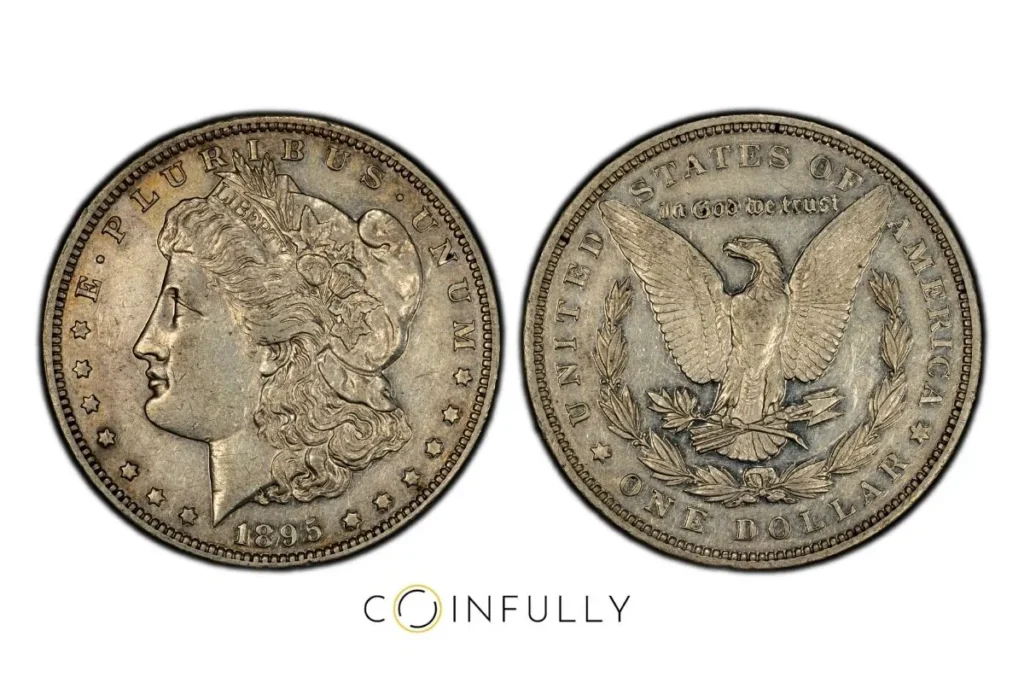
Remember that coins should be sent for grading as they are. Cleaning a coin can leave permanent damage that will negatively affect the grade and the value.
When Grading Is Usually Not Worth It
For common modern coins with a small premium or that have clear defects from circulation, grading often costs more than the value it adds.
In these cases, selling the coin raw to a trusted local coin shop or reputable dealer is frequently the smarter move. The right choice depends on the specific coin.
How Coinfully Can Help Determine True Market Value
Knowing what a raw coin is truly worth takes genuine expertise, and that’s where Coinfully can help. Our free coin appraisal provides you with a fair, knowledge-backed assessment of true market value, whether or not the coins have been graded.
Coinfully is an accredited member of the American Numismatic Association and a certified, registered dealer with both PCGS and NGC, so your coins are assessed by numismatic experts who understand how the market is trending and the impact grading can have.
Along with your appraisal, we’ll include an offer to buy your coins, but there‘s no obligation to sell. In fact, if it makes more sense to sell your coins to a local coin shop, we’ll recommend that option to you and explain why.
Should you decide to sell your coins through Coinfully, you’ll find that the process is built to be secure and transparent.
Your package will be fully insured by Lloyd’s of London and opened under 4K security cameras upon arrival. Once your collection is received and verified, payment is issued the same business day.
For qualifying large or historically significant collections, we offer a concierge at-home appraisal service where a member of our team will travel to your location to assess your coins in person and make an offer on the spot.
If you’d like to discuss your collection and learn more about our process, give us a call at (704) 621-4893, and one of our numismatists will be glad to help.
Grade With Strategy, Not Just Optimism
A coin that looks perfect is certainly nice to have, but appearance and a certified grade are not the same, and the market pays for the grade.
Dealers price raw, ungraded coins based on probable outcomes because the uncertainty is real, and chasing a perfect grade carries the risk of an expensive miss.
The smart approach is to weigh the true cost of grading against the realistic upside, submit only when the math clearly favors it, and lean on knowledgeable evaluation when you’re unsure.
Frequently Asked Questions About Grading Coins
Why won’t a dealer pay Greysheet prices for my raw coin?
A raw coin might grade in a high mint state, or it might come back a point lower and be worth far less, so dealers typically only pay Greysheet prices for coins that have been officially graded, authenticated, and certified. Since no one can guarantee the result, dealers price raw coins on their Adjectival Grades with a margin for that uncertainty.
How much does it actually cost to grade a coin?
Coin grading involves more than just the grading fee. A realistic all-in cost can include a membership with the grading service, the tiered grading fee, and insured shipping both ways, which together can land around $100 or more per coin, depending on the service you choose. That total is why grading only makes sense when the upside is large enough.
Is coin grading worth it for modern coins?
For modern coins, grading is usually not worth the cost. Modern coins frequently have been circulated, which means they’ll be worn, rubbed, or damaged. This means that the grading cost can exceed the value it adds. Grading modern coins makes the most sense when a coin has a distinct rarity such as very high condition, a key date, or key mintmark.
What is the real difference between AU and MS67?
MS67 is an exceptional grade for a vintage coin, showing only the faintest trace of contact marks under magnification. AU (Almost Uncirculated) shows visible wear from limited circulation, with softer luster and more noticeable marks. That gap in preservation is a big part of why the price difference between the two can be enormous.
Can I trust a dealer’s estimate of my raw coin’s grade?
A reputable, knowledgeable dealer can give you a well-informed estimate based on experience, but it remains an estimate until a professional service confirms it. A trustworthy dealer will explain their reasoning clearly and price your coin fairly based on its probable grade. Before paying to have a coin graded, it’s worth getting an experienced opinion. A quick conversation can often tell you whether grading is likely to add enough value to justify the cost.

