How Do Coin Appraisers Determine Value? Guide for Collectors
Discover the Factors That Have the Biggest Impact on Coin Value

Jun 26th, 2026 · 5 Minute Read
If you have a collection of old coins sitting in a drawer or a safe, you’ve probably wondered what they’re actually worth. The answer depends on several factors that professional coin appraisers evaluate during every assessment.
Understanding what goes into a coin appraisal can help you set realistic expectations, avoid undervaluing your collection, and make smarter decisions about selling.
At Coinfully, our numismatic experts have decades of experience appraising coin collections. When you take advantage of our free online coin appraisal service, you’ll receive a detailed evaluation of your coins that is based on real-world market conditions.
Because of our low overhead and global access to buyers, we’re able to provide the highest possible offers, but there’s never any pressure to sell. You won’t find an easier way to get a professional coin appraisal or to sell coins online.
How Do Coin Appraisers Determine Value?
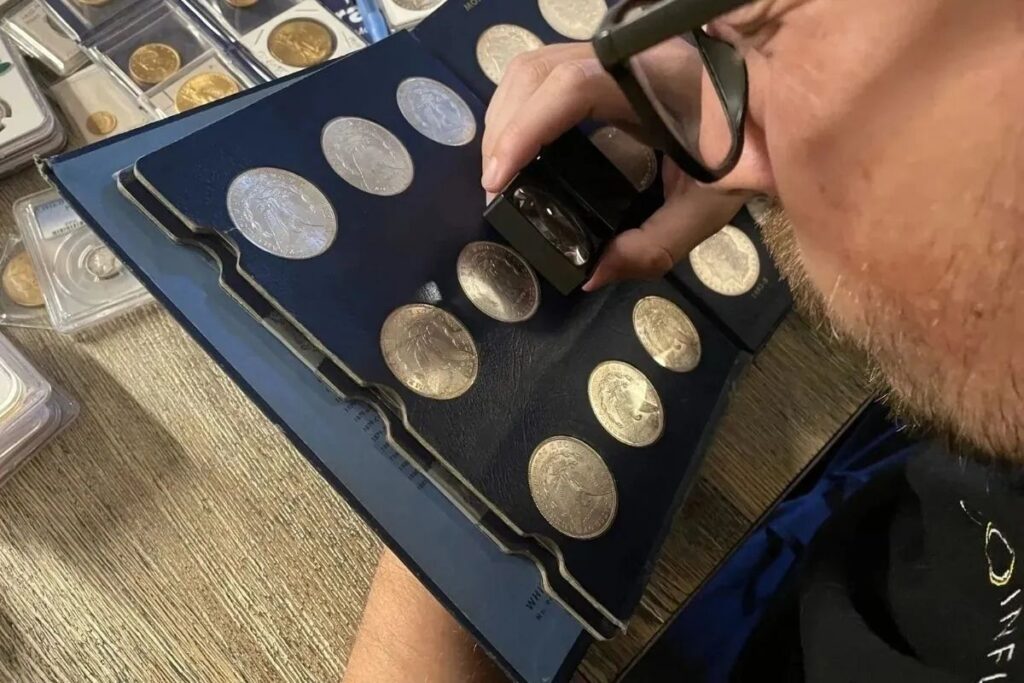
Professional coin appraisers look at far more than just age when determining what a coin is worth. They carefully evaluate factors such as condition, rarity, precious metal content, collector demand, and authenticity to arrive at an accurate and fair market value.
Condition and Grade
A coin’s physical condition is the single biggest factor in its appraised value. Professional appraisers evaluate condition and estimate the coin grade using the Sheldon Scale, a 1-to-70 grading system that has been the industry standard since the mid-20th century.
Appraisers look at several specific attributes when grading:
- Surface preservation: Are there scratches, nicks, or contact marks? Has the coin been cleaned or polished (which typically lowers value)?
- Strike quality: How sharply were the details impressed during minting? A strong, well-centered strike adds value.
- Luster: Does the coin still have its original mint sheen? Coins with full, undisturbed luster command higher prices.
- Eye appeal: This is the overall visual impression. Two coins with the same technical grade can differ in value if one simply “looks better” to collectors.
- Wear and circulation marks: Coins that circulated for years show flattened details and edge wear that lower the grade.
- Professional grade: Has the coin received a grade from a third-party grading service? Coins with a high grade are worth more.
Coin condition and value are tightly interwoven. Even a one- or two-point difference on the Sheldon Scale can mean hundreds or thousands of dollars in value.
That is why professional grading from services such as PCGS (Professional Coin Grading Service) or NGC (Numismatic Guaranty Corporation) is so important for high-value coins.
These third-party grading services authenticate and encapsulate coins in tamper-evident holders, providing an objective grade that buyers and sellers trust.
Rarity and Mintage Numbers
How many coins were originally produced and how many survive today directly affects value. Appraisers consider both mintage (the number struck at the mint) and estimated surviving population when assessing rarity.
For example, a coin with a mintage of 500,000 might sound common, but if most were melted down or lost over time, the actual surviving population could be just a few hundred. That scarcity drives prices up significantly.
Mintmarks also affect value. Coins struck at different U.S. Mint facilities (Philadelphia, Denver, San Francisco, New Orleans, Carson City, and West Point) carry different mintmarks (P, D, S, O, CC, and W), and some facilities produced far fewer coins in certain years.
Carson City Morgan dollars, for instance, are consistently more valuable than Philadelphia-minted examples of the same date because fewer were made.
Population reports from PCGS and NGC track how many examples of each coin and grade combination have been certified, giving appraisers hard data on conditional rarity.
A coin might be common in lower grades but extremely rare in Mint State condition, making the grade-rarity combination a critical part of the valuation.
Precious Metal Content and Melt Value
For coins made of gold, silver, platinum, or other precious metals, the metal content establishes a baseline value known as the melt value. This is the minimum a coin is worth based purely on the weight and current market price of its metal content.
Appraisers calculate coin melt value using the coin’s known composition and weight. For example, a pre-1965 U.S. silver quarter contains roughly 0.18 troy ounces of silver.
When silver is trading in the high 80s per ounce, that quarter has a melt value of roughly $15, regardless of its numismatic appeal.
For many common-date coins, the melt value is the primary driver of worth, but for rare dates, key varieties, or coins in exceptional condition, the numismatic value (collector value) can far exceed the melt value. A skilled appraiser evaluates both to give you the full picture.
Coin Market Demand and Supply
Coin values are not fixed. They fluctuate based on supply and demand in the collector market, just like any other asset. During a professional coin appraisal, the appraiser considers current market conditions, recent auction results, and collector trends when determining value.
A coin that was overlooked a decade ago might be in high demand today because of a shift in collecting trends, a popular book or TV segment, or simply because fewer examples have come to market recently.
Conversely, if a large hoard of a previously rare coin surfaces, values can drop.
Published price guides such as The Official Red Book: A Guide Book of United States Coins provide baseline retail values, but experienced appraisers also reference live auction records and dealer asking prices to get an accurate, up-to-date valuation.
The numismatic market is dynamic, and what a coin sold for two years ago may not reflect what it would bring today.
Historical Significance and Provenance
Coins connected to important historical events, famous collections, or notable figures carry a premium that goes beyond their grade and rarity. This is known as provenance, and it can add substantial value.
A coin that was part of a well-known collection (such as the Eliasberg or Pogue collections) often sells for more at auction simply because of its documented history.
Similarly, coins from significant historical periods, such as Civil War-era issues, colonial currency, or early U.S. Mint productions, attract collectors who value the story behind the piece.
Appraisers also look for historical significance in the coin’s design, the circumstances of its production, and any notable errors or varieties that make it a standout piece from its era.
Die Varieties and Mint Errors
Not all coins of the same date and mintmark are identical in value. During production, dies can crack, shift, or wear in ways that create distinct varieties. Some of the most valuable coins in numismatics are error coins or die varieties that were unintentionally produced.
Common types of valuable varieties and errors include:
- Doubled dies: When a die is impressed twice at slightly different angles, creating a visible doubling effect on the coin’s design. The 1955 doubled die Lincoln cent is one of the most famous examples.
- Repunched mint marks (RPMs): Older coins where the mintmark was hand-punched into the die sometimes show evidence of multiple impressions.
- Off-center strikes: Coins struck when the planchet was not properly aligned in the press, resulting in a partial or shifted design.
- Die cracks and cuds: Raised lines or blobs caused by breaks in the die.
Appraisers trained in variety attribution can identify these features, which often command significant premiums over normal examples. Organizations such as PCGS and NGC also attribute popular varieties on their holders, adding transparency and value.
Coin Authentication
Before any of these factors matter, an appraiser must first confirm that a coin is genuine. Counterfeiting has been a concern in numismatics for centuries, and modern fakes can be highly convincing.
Professional appraisers use a combination of visual inspection, weight measurement, dimensional analysis, and sometimes advanced tools such as X-ray fluorescence (XRF) to verify authenticity.
Third-party grading services include coin authentication as part of their process, which is one of the key reasons certified coins trade at a premium over raw (ungraded) coins. If a coin cannot be authenticated, its market value drops dramatically.
Getting a Coin Appraisal for Different Purposes
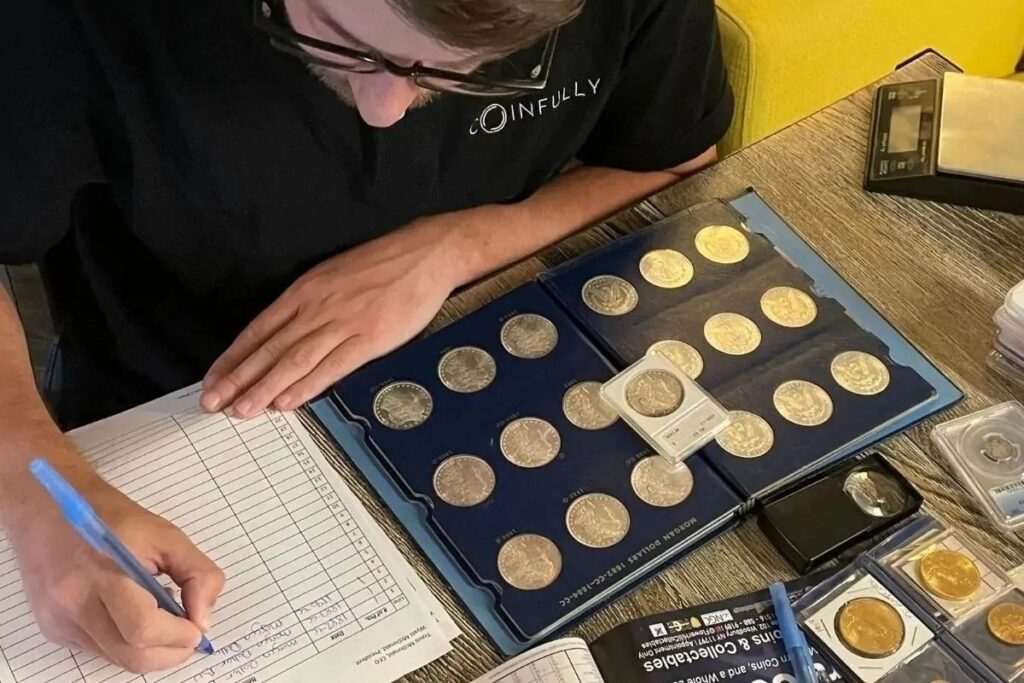
It is worth noting that the “value” of a coin can differ depending on the purpose of the appraisal:
- Insurance appraisals typically reflect replacement value, which is higher because it accounts for the cost of finding and purchasing a comparable coin at retail.
- Estate appraisals estimate fair market value for probate or tax purposes, which is generally closer to what the coin would bring at auction.
- Selling appraisals provide a realistic expectation of what a dealer or buyer would pay, which is usually below full retail.
A professional appraiser will clarify the type of valuation being provided and adjust their assessment accordingly. Understanding this distinction helps you avoid confusion and set appropriate expectations.
If you’re not sure where to start, our guide on how to get a coin appraisal explains the process in detail.
How Coinfully Can Help
Whether you have a single inherited coin or an extensive collection, getting a professional appraisal is the smartest first step before making any decisions. Coinfully offers free online coin appraisals that give you an honest, expert evaluation of your coins without any obligation to sell.
For qualifying collections, we also offer an at-home appraisal service, where one of our numismatic experts will come to you to provide a detailed evaluation of your coins in person.
Our team evaluates every factor covered above, from condition and rarity to metal content and market demand, so you get a complete picture of your collection’s worth.
If you decide to sell, Coinfully provides competitive offers and handles the entire process, making each step simple and transparent.
Ready to find out what your coins are worth? Contact us today to get the appraisal process started. If you have any questions, call (704) 621-4893 to speak with one of our coin specialists.
Real High-Value Coins We’ve Appraised at Coinfully
The following are actual coins we’ve recently appraised at Coinfully. Without a professional appraisal, chances are good that the owners would never have known the true value of their coins.
1895 Morgan Silver Dollar (Proof-Only Key Date)
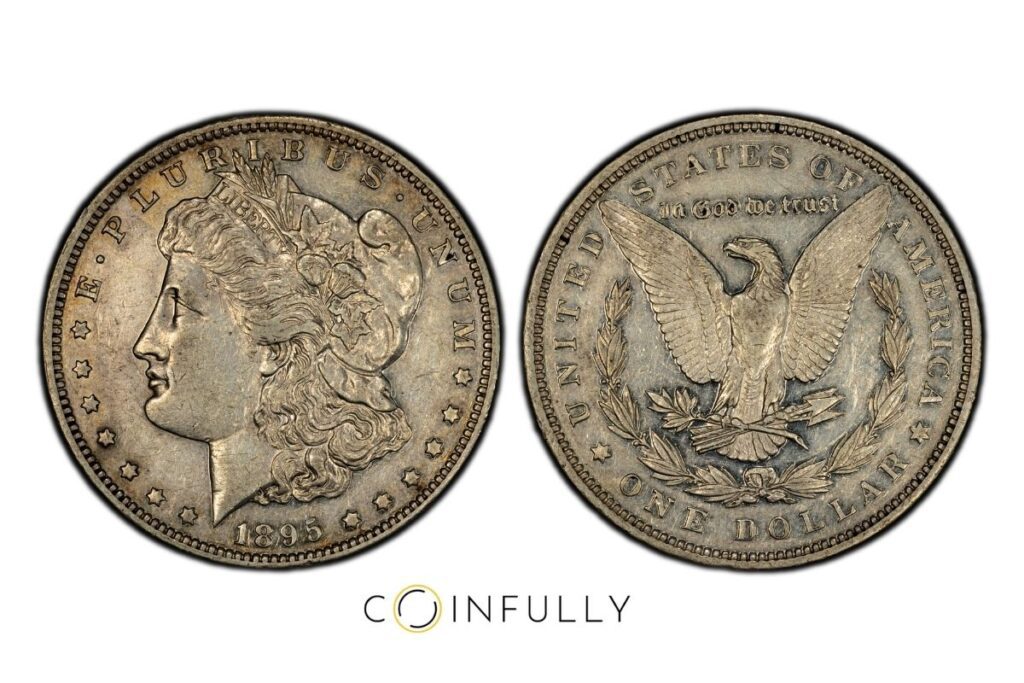
- Certification #: 61231159
- Coin Grade: PR50
- Appraised Value: $43,000
1879-CC Morgan Silver Dollar
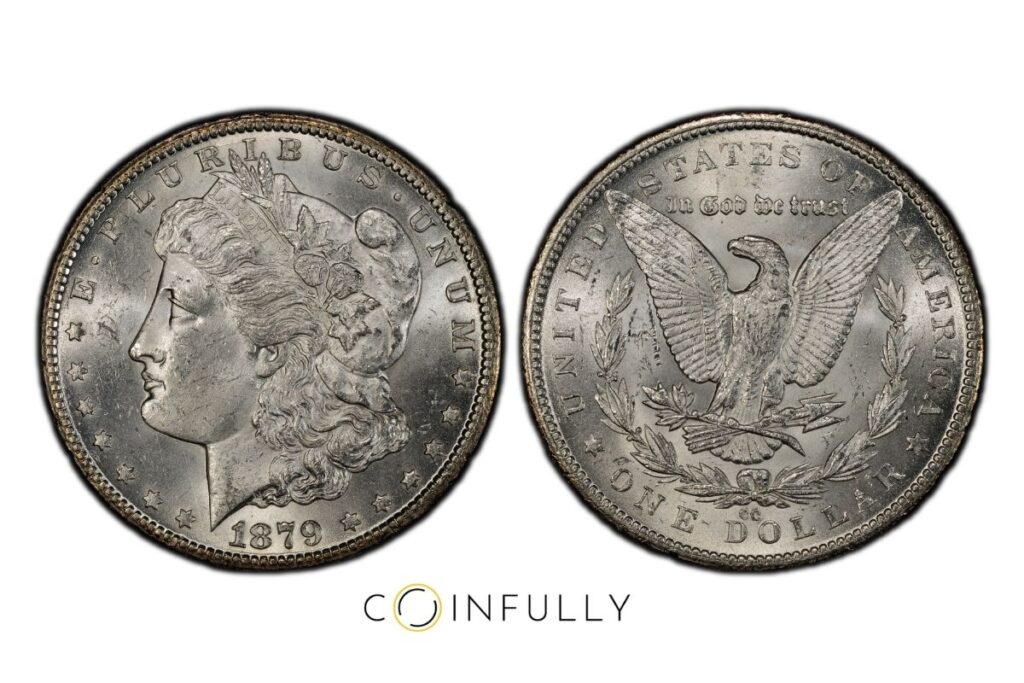
- Certification #: 59851414
- Coin Grade: MS63
- Appraised Value: $7,800
2020 American Gold Eagle (V75 West Point Privy)
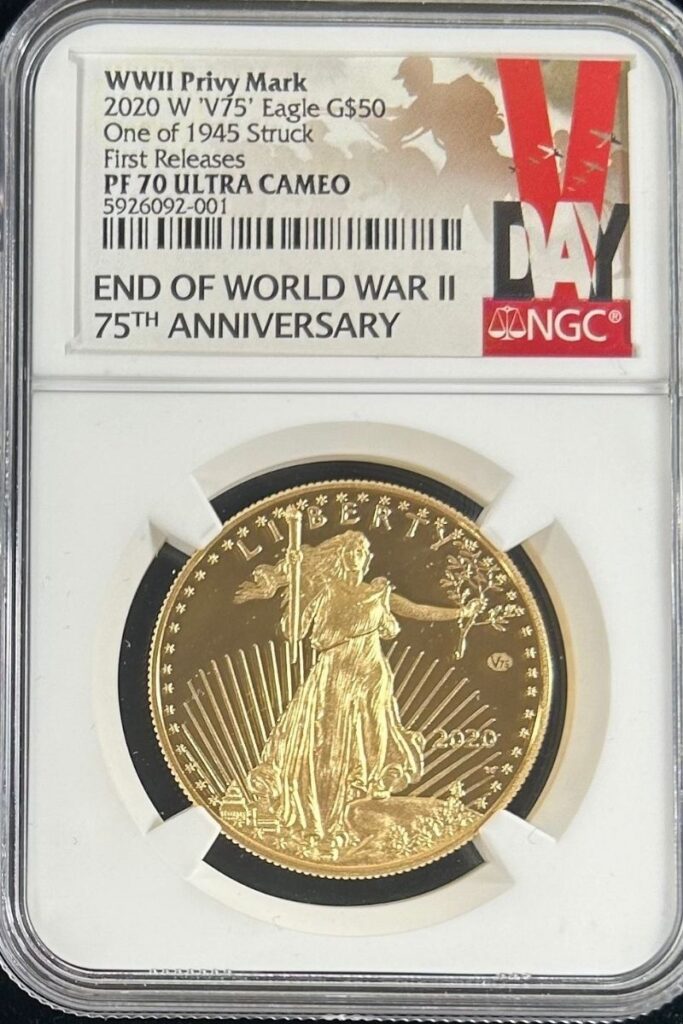
- Certification #: 5926092-001
- Coin Grade: PF70UCAM
- Appraised Value: $20,000
Frequently Asked Questions
What is the most important factor in determining a coin’s value?
Condition (grade) is generally the most significant factor. A coin in near-perfect condition can be worth many times more than the same coin in circulated condition. However, for very rare coins, rarity and market demand can outweigh grade.
How much does a professional coin appraisal cost?
Costs vary depending on the appraiser and the size of the collection. Some dealers offer free appraisals, while appraisals for insurance or estate purposes often come with a flat fee or hourly rate. Coinfully offers free online appraisals with no obligation.
Should I clean my coins before getting them appraised?
No. Cleaning a coin almost always reduces its value. Collectors and appraisers prefer coins with original, undisturbed surfaces. Even well-intentioned cleaning can leave microscopic scratches that lower the grade.
What is the difference between coin melt value and numismatic value?
Melt value is based solely on the precious metal content of a coin at current market prices. Numismatic value reflects what collectors are willing to pay based on rarity, condition, demand, and historical significance. Numismatic value can be many times higher than melt value for rare or high-grade coins.
Do I need a certified appraisal to sell my coins?
Not necessarily, but getting a professional appraisal and having coins graded by PCGS or NGC can increase buyer confidence and often results in higher sale prices, especially for valuable individual pieces. For large collections, a professional appraisal helps ensure you receive fair value.
Wyatt McDonald President & Co-Founder of Coinfully. A student of numismatics and trained in the ANA Seminar in Denver, Wyatt is the face of Coinfully and a true expert. After spending a decade buying coins over the counter at a coin shop, he knew there had to be a better way, for everyone involved.
Get an Appraisal
Think you’re onto something big with your collection? Let’s talk…


 401 Hawthorne Ln, Ste 110-323 - Charlotte, NC 28204