

Learn the Importance of an Estate Coin Appraisal, How It Can Protect You, What To Look for in an Appraiser, and Next Steps.
Inheriting a coin collection can be overwhelming. Whether it’s a carefully curated set of rare coins or a couple of graded coins in a safety deposit box, the first question tends to be the same: what is it actually worth?
An estate coin appraisal answers that question and gives heirs, executors, and estate attorneys the documentation they need to make informed decisions about selling, distributing, or keeping the collection.
This guide covers everything you need to know about appraising coins for estate purposes, from IRS requirements to finding a qualified appraiser and understanding what drives a coin’s value.
If you need an estate coin appraisal, a free online appraisal from Coinfully is a practical first step: try Coinfully’s free online coin appraisal service.
Coinfully is an accredited member of the American Numismatic Association and a certified, registered, and recognized dealer with both PCGS and NGC. Our experts will provide a detailed evaluation of your coins that can be used for both personal and legal purposes.
*The content contained here should not be considered legal or tax advice. Consult an attorney or tax professional for information regarding your specific situation.
Table of Contents
Why an Estate Coin Appraisal Is Important
A professional coin collection appraisal for estates serves critical legal and financial purposes including:
- Tax compliance. The sale of inherited property may be taxable. Consult a tax professional for guidance.
- Estate distribution. When multiple heirs are involved, an accurate appraisal ensures fair division of assets.
- Probate requirements. Courts may require professional appraisals for estate settlement, particularly for collections of significant value.
- Insurance documentation. If the collection will be kept, an appraisal establishes coverage amounts.
- Selling preparation. Knowing the value before approaching buyers prevents you from accepting offers far below what the coins are worth.
Without a proper appraisal, heirs risk undervaluing a collection worth thousands or overestimating one that holds mostly sentimental value.
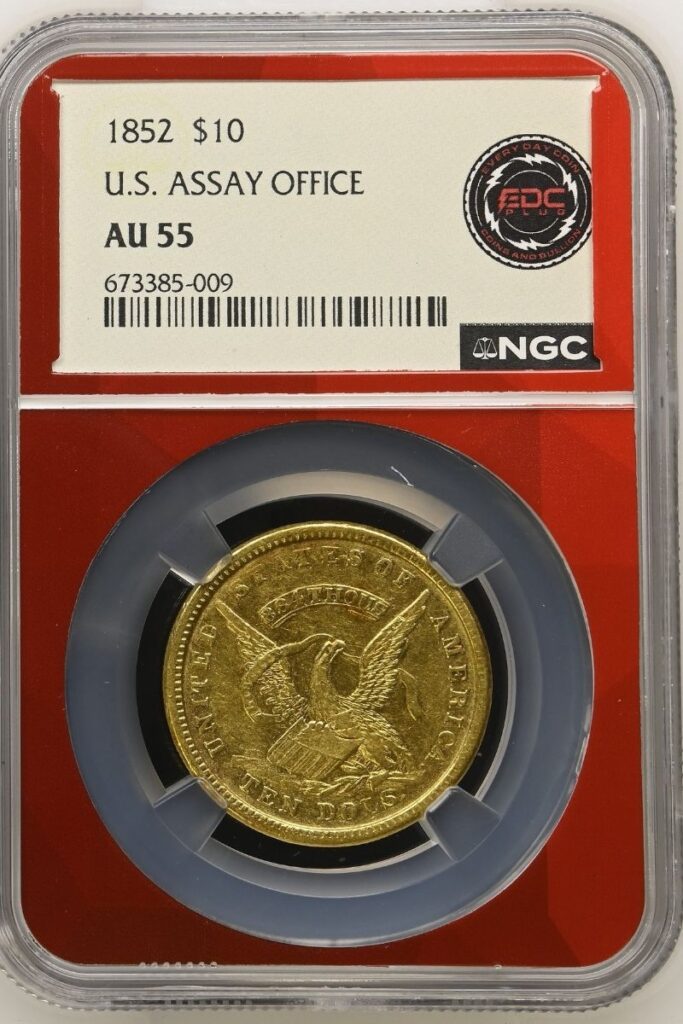
Recently, Coinfully appraised an 1852 California Gold $10 Assay Office Slug graded AU55 and found the approximate value to be roughly $13,800. A professional coin appraisal can tell you if the collection you’ve inherited contains something just as valuable.
Understanding IRS Fair Market Value Requirements
When someone passes away, the IRS allows a step-up in basis for inherited assets. This means the cost basis of the coin collection resets to its fair market value (FMV) on the date of death (or an alternative valuation date, if the estate executor elects it).
If a coin was purchased for $500 and was worth $2,000 at the time of the collector’s death, and you later sell it for $3,000, you only owe capital gains tax on the $1,000 gain, not the full $2,500 profit from the original purchase price.
Proper documentation protects heirs from IRS disputes and ensures accurate tax reporting. Keep appraisal reports, grading certificates, original purchase receipts (when available), and insurance records together in a secure location, and always work with a tax expert.
What Determines the Value of Estate Coins
A qualified appraiser evaluates coins based on several factors:
- Coin Grade: This is the single most important factor for rare numismatic coins. The condition of a coin, measured on the Sheldon scale from 1 (poor) to 70 (perfect), directly impacts its numismatic value. Even moderately rare coins lose significant value when heavily worn, improperly stored, or cleaned.
- Metal Content: Gold coins, silver coins, and platinum coins have a baseline melt value tied to current spot prices. Numismatic premiums are added on top of that for rare dates, low mintages, or exceptional condition.
- Mintmark and Date: These identify where and when a coin was produced. Certain mintmarks (such as the “S” for San Francisco or “CC” for Carson City) sometimes command premiums because of lower production numbers.
- Rarity and Demand: These drive collector interest. A coin can be old without being rare. The combination of low surviving populations and active collector demand is what creates real value.
- Comparable Sales: These provide the market evidence. A proper appraisal references recent auction results and dealer sales for coins with matching attributes, with adjustments for condition, finish, and demand.
How To Find a Qualified Coin Appraiser for Estate Coins
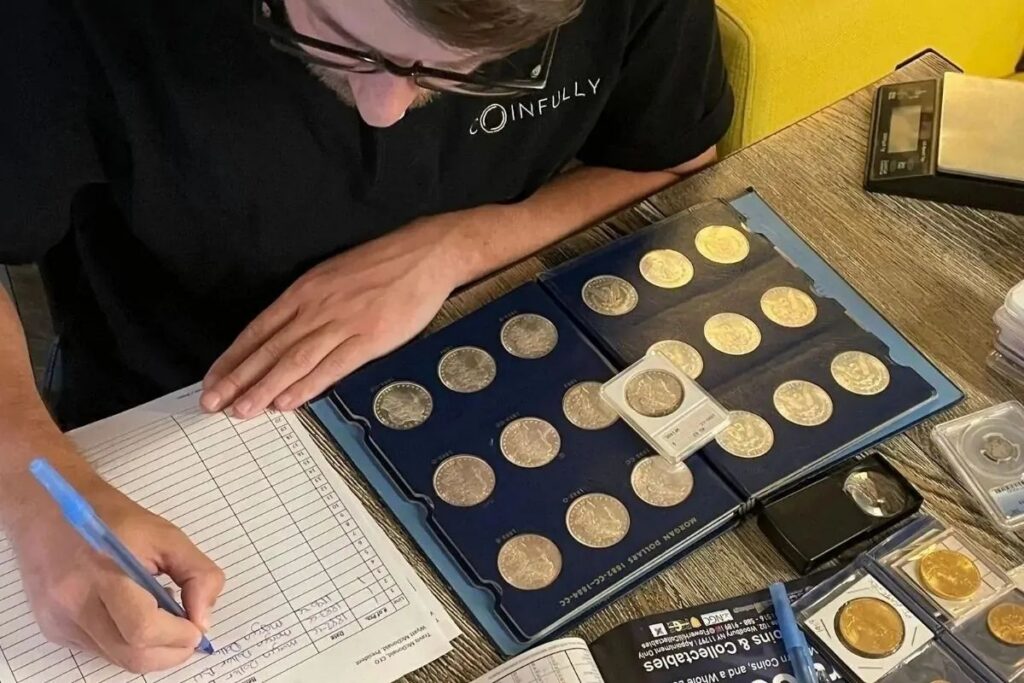
Not every coin appraiser is qualified to conduct an estate coin appraisal. For estate purposes, you need someone whose work will hold up to IRS scrutiny and whose valuations reflect genuine market conditions.
Coin appraisal costs can vary considerably, but credentials, experience, and documentation are often more important than price alone.
Look for appraisers who:
- Have professional credentials from recognized organizations (ANA, PNG, or NGC).
- Specialize in the type of coins in your collection.
- Provide detailed written reports with comparable sales data.
- Are familiar with IRS requirements for estate appraisals.
Learn about typical pricing standards in our guide on how much it costs to get a coin graded.
Steps To Take When You Inherit a Coin Collection
If you have recently inherited coins, here’s a practical roadmap:
- Don’t clean or alter the coins. Cleaning coins almost always reduces their value. Leave them exactly as you found them.
- Gather Documentation. If possible, gather any original packaging, certificates, purchase records, and past appraisals.
- Get a professional appraisal. Contact a qualified appraiser who can assess the full collection. For estate purposes, request a formal written appraisal that includes FMV (fair market value) for each significant piece.
- Consult a tax professional. An accountant or estate attorney familiar with collectibles can advise on reporting requirements.
- Decide next steps. Based on the appraisal, you can sell or keep the coins, distribute them among heirs, or donate the collection. Each option has different tax implications.
Selling Estate Coins After an Appraisal
Once you have a professional appraisal in hand, you’re in a strong position to sell. Your options include selling your coins online, working with a local coin dealer, using an auction house, listing coins through an online marketplace, or working with a professional coin buyer.
For estate collections, convenience and trust often matter as much as price. Dealing with an inherited collection during an already stressful time calls for a selling process that’s straightforward, transparent, and fair.
Coinfully has helped many people who have inherited coin collections navigate the appraisal and selling process. Our free online coin appraisal provides a detailed, no-obligation valuation from home.
For large or particularly valuable collections that qualify, our numismatic experts can travel to you for an in-person, at-home appraisal. There’s never any pressure to sell, and the appraisal can be used for estate documentation, selling decisions, insurance, and tax reporting.
Planning Ahead: Protecting Coin Collection Value for Future Generations
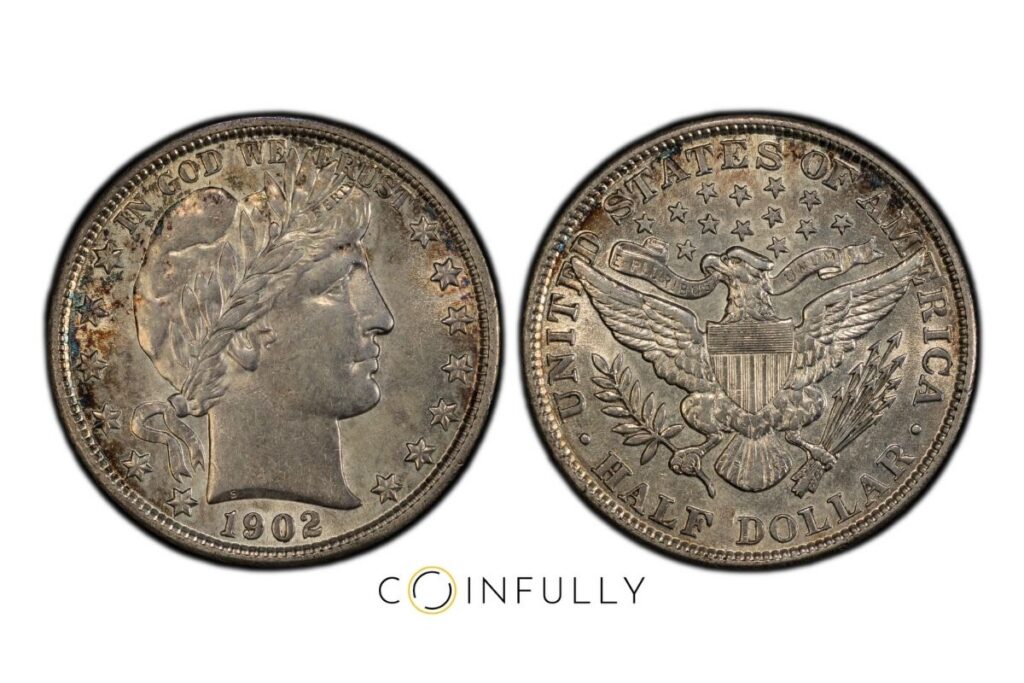
If you’re the collector rather than the heir, estate planning can save your family significant time, money, and confusion. To avoid common mistakes when leaving a coin collection to heirs:
- Maintain a current inventory with photos and values.
- Store coins properly to preserve condition and grade.
- Consider having key pieces professionally graded by PCGS or NGC.
- Work with an estate attorney to establish trusts or designate custodians for the collection.
- Keep appraisals updated, as coin values change with market conditions.
A little preparation now can prevent rushed decisions during probate and ensure your collection’s legacy is preserved.
Get Your Estate Coin Appraisal Started Today
An estate coin appraisal is the foundation for every decision that follows, whether selling, keeping, distributing, or donating. Getting it right helps protect heirs financially and legally.
Try a free coin appraisal online from Coinfully today. Your appraisal will be completed by numismatic experts and will be valid for estate documentation and insurance purposes.
Coinfully is an accredited member of the American Numismatic Association (ANA), is an authorized, registered dealer with PCGS and NGC, and holds an A+ BBB rating.

