Numismatic Appraisal: Understanding the True Value of Your Coins
Discover the Value of a Numismatic Appraisal of Your Coins

Jun 1st, 2026 · 5 Minute Read
Not every coin is worth only the metal it contains. Some coins carry a numismatic value that far exceeds their weight in gold or silver, while others are worth little more than their melt value regardless of age.
A numismatic appraisal determines where your coins fall on that spectrum and gives you the information you need to make smart decisions about selling, insuring, or holding your collection.
This guide explains what numismatic value means, how it differs from melt value, when you should work with a numismatist versus a bullion dealer, and how the appraisal process works.
Eager to know the true value of your coins? Get a free online coin appraisal from Coinfully. Our streamlined process is designed to be stress free, and the appraisal you receive can be used for selling decisions, estate planning, insurance purposes, and more.
Table of Contents
What Is Numismatic Value?
Numismatics is the study and collection of coins, paper currency, and related objects. The term comes from the Greek word nomisma meaning coin.
A numismatist is someone who studies or collects coins, and the numismatic meaning in practical terms refers to the collector value a coin holds beyond the raw material it is made from.
Numismatic value is the premium a coin commands based on factors that have nothing to do with its metal content. These factors include:
- Rarity. Coins with low mintage numbers or small surviving populations are more desirable to collectors. A coin that was produced in the millions but has few surviving examples in high grade can be just as rare as one with a small original mintage.
- Condition. Grading evaluates surface preservation, strike quality, luster, and overall eye appeal. The difference between a coin graded Fine-15 and one graded Mint State-65 on the Sheldon scale can represent a price difference of hundreds or thousands of dollars.
- Historical significance. Coins connected to notable events, transitional designs, or famous collections attract strong collector interest. The 1909-S VDB Lincoln cent, for example, commands a premium because of the controversy surrounding designer Victor David Brenner’s initials on the coin’s reverse.
- Demand. Collector interest drives prices. Coins in popular series, coins that complete sets, and coins that have been featured in numismatic publications or exhibitions tend to see higher demand and stronger numismatic premiums, whether selling coins onlineor in person.
Real High-Value Coins We’ve Appraised at Coinfully
The following examples are coins we’ve recently appraised at Coinfully and the values they received. These examples offer insight into how different characteristics, such as grade, mintage, and desirability, affect overall market value.
1852 California Gold $10 Assay Office Slug
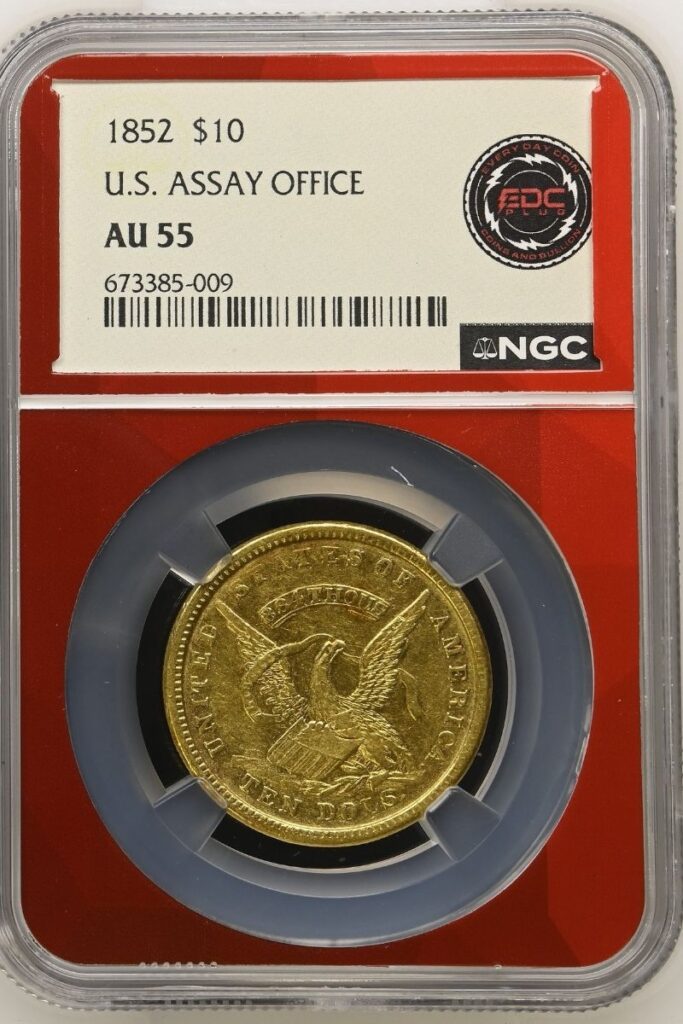
- Certification #: 673885-009
- Coin Grade: AU55
- Appraised Value: $13,800
1885 Liberty Head Nickel (V-Nickel)
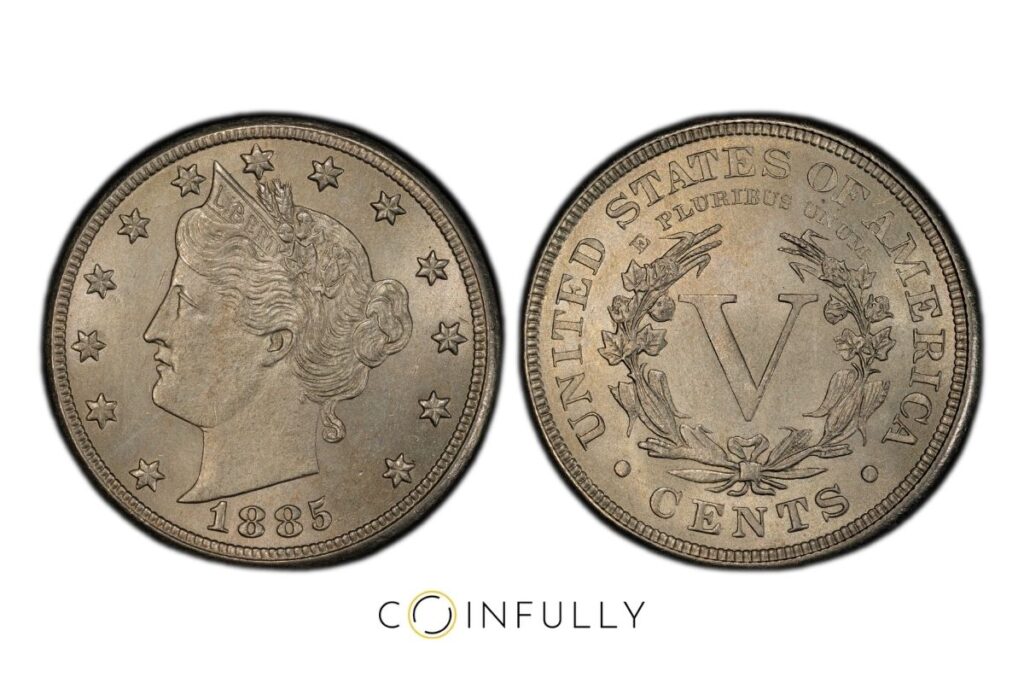
- Certification #: 59851418
- Coin Grade: MS63
- Appraised Value: $3,300
1795 Half Cent (Lettered Edge, Early American)
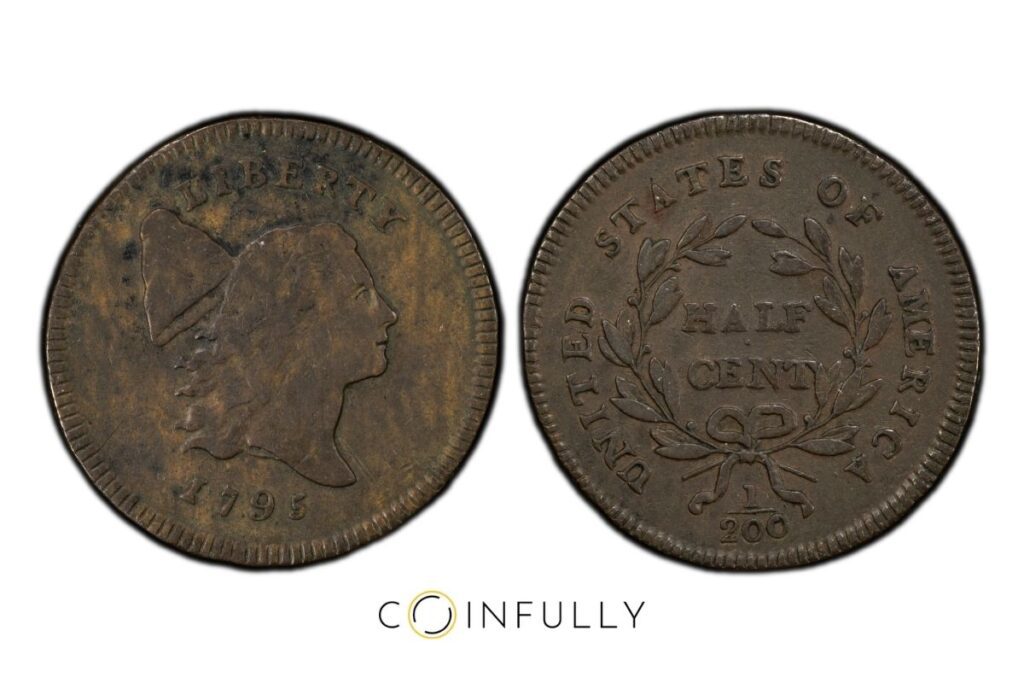
- Certification #: 59833931
- Coin Grade: VF35
- Appraised Value: $4,800
Numismatic Value vs. Melt Value
Understanding the difference between numismatic value and melt value is essential for anyone considering selling coins.
Coin Melt Value
Melt value (also called bullion value) is the worth of a coin based solely on the precious metals it contains.
If a coin is made of 90% silver, its melt value is calculated by multiplying the weight of silver in the coin by the current silver spot price, which is, as of early May 2026, hovering around $74 an ounce.
For a standard pre-1965 U.S. silver quarter, the coin melt value fluctuates with the silver market but is determined entirely by metal content.
Numismatic Value
Numismatic value is the additional premium collectors are willing to pay above melt value.
A 1932-D Washington quarter, for instance, has a melt value based on its silver content that might be around $13, but its numismatic value can reach $300 or more due to its low mintage and collector demand.
Some coins are valued primarily for their metal content. Modern bullion coins such as American Gold Eagles or Canadian Silver Maple Leafs are produced specifically for investors and trade at prices closely tied to spot metal prices. Their numismatic premium is minimal.
Other coins carry numismatic value that dwarfs their metal content. A copper Lincoln cent from 1909-S VDB has virtually no melt value, yet it sells for hundreds of dollars purely on collector demand and rarity.
Many coins fall somewhere in between. A common-date Morgan silver dollar has meaningful silver content and some numismatic premium. Where your specific coins land on this spectrum is exactly what a numismatic appraisal reveals.
When To Use a Numismatist vs. a Bullion Dealer for Coin Appraisal
Choosing the right professional to evaluate your coins can significantly affect the price you receive.
A numismatist or numismatic expert specializes in the collector side of the coin market. They understand grading, rarity, variety identification, and the subtleties that separate a common coin from a valuable one.
You should work with a numismatist when your coins include rare dates, unusual varieties or errors, coins in exceptional condition, older coins (pre-1940), proof sets, or any pieces that might have collector significance beyond their metal content.
A bullion dealer focuses on precious metals. They buy and sell gold coins, silver coins, platinum, and palladium based primarily on weight and purity relative to current spot prices.
A bullion dealer is the right choice when you have common-date gold or silver coins in average condition, modern bullion products (American Eagles, Krugerrands, Maple Leafs, etc.), bars, or rounds.
If you are unsure which category your coins fall into, start with a numismatic appraisal. A qualified numismatist can identify both the collector value and the metal value of your coins, ensuring nothing gets overlooked.
Taking bullion-value coins to a numismatist costs you nothing extra, but taking rare numismatic coins to a bullion dealer could cost you significantly if they offer only melt value for coins worth much more.
How a Numismatic Appraisal Works
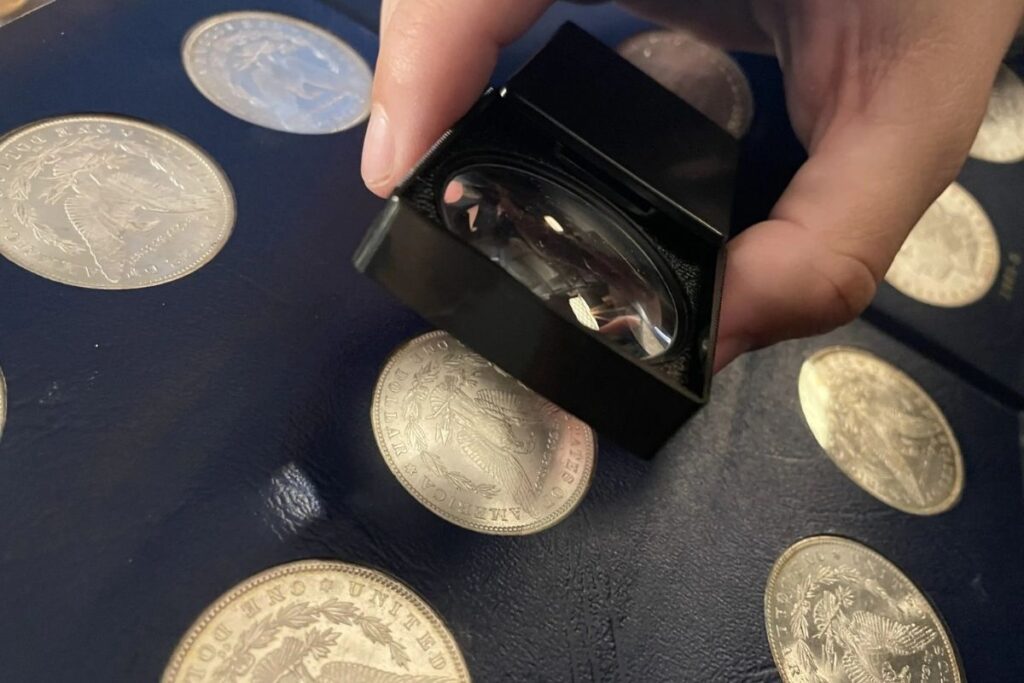
A professional numismatic appraisal involves several steps designed to establish the accurate value of your coins.
The appraiser begins with an initial review, examining the collection as a whole to understand its scope and identify coins that need closer attention.
Bulk items such as common-date silver coins or circulated pennies may be assessed as groups, while potentially valuable pieces are set aside for individual evaluation.
Individual coin assessment involves examining each significant coin for authenticity, condition, variety, and any notable characteristics.
The appraiser looks at the coin’s surfaces under magnification, checks for signs of cleaning or alteration, and assigns an estimated grade based on established standards.
For coins that warrant it, the appraiser may recommend third-party numismatic certification through PCGS (Professional Coin Grading Service) or NGC (Numismatic Guaranty Corporation).
These coin grading services provide independent, standardized grades and encapsulate coins in tamper-evident holders. Numismatic certification can increase a coin’s market value by providing buyers with confidence in its grade and authenticity through coin authentication.
The final appraisal report documents the coins evaluated, their grades, and their estimated values based on current market data. This documentation is useful for sales, insurance, estate planning, and tax purposes.
Get a Professional Numismatic Appraisal From Coinfully
At Coinfully, our team of numismatic experts provides thorough, no-obligation appraisals that cover both the collector value and precious metals value of your coins.
Whether your collection includes rare numismatic coins or common bullion pieces, we evaluate everything using current market data and decades of professional experience.
Our free online coin appraisal process is simple. Share photos or an inventory of your coins, and our team provides a detailed appraisal along with a competitive purchase offer.
If you decide to sell gold coins, sell silver coins, or sell your entire collection, we’ll provide comprehensive shipping insurance through Lloyd’s of London and issue payment immediately upon verification.
If you choose not to sell, there is no pressure and no cost for the appraisal.
For qualifying collections, Coinfully offers at-home appraisal visits where a numismatic expert comes to you, evaluates the coins in person, and can issue payment on the spot.
If you have coins and are not sure whether they carry numismatic value or are primarily worth their melt value, a professional appraisal is the smart first step.
Contact Coinfully today for a free numismatic appraisal or call 704-621-4893 to speak with an expert about your collection.
Wyatt McDonald President & Co-Founder of Coinfully. A student of numismatics and trained in the ANA Seminar in Denver, Wyatt is the face of Coinfully and a true expert. After spending a decade buying coins over the counter at a coin shop, he knew there had to be a better way, for everyone involved.
Get an Appraisal
Think you’re onto something big with your collection? Let’s talk…


 401 Hawthorne Ln, Ste 110-323 - Charlotte, NC 28204